News
Three years ago, a German cannabis reform seemed like a matter of months away. Today, Germany has partial legalisation under its Cannabisgesetz, France is running a cautious medical pilot, and Malta has had a functioning adult-use framework since 2021. Europe is not converging on cannabis. It is running parallel experiments, each with different rules, different tolerances, and different ideas about what regulation is actually for.
That divergence is not a failure. But it is a challenge — particularly for the millions of Europeans who travel across borders and find themselves navigating a patchwork where something legal at home becomes an offence forty kilometres away.
A Continent of Different Answers to the Same Question
Germany's Cannabisgesetz, which came into force in April 2024, permits adults to possess up to 25 grams in public and cultivate up to three plants at home. It also allows non-commercial Cannabis Social Clubs — capped at 500 members, a threshold that will be familiar to anyone following Malta's own framework — to supply members. The German model is explicitly non-commercial: no licensed retail, no open market, no cannabis shops on the high street.
Malta's approach, built around Cannabis Harm Reduction Associations — CHRAs (non-profit, member-based clubs licensed and overseen by ARUC, the Authority on the Responsible Use of Cannabis) — shares some structural DNA with the German clubs. Both limit supply to members. Both prohibit profit-driven retail. But Malta's framework, established under Chapter 628 of the Laws of Malta, predates Germany's by three years, and ARUC has had time to develop operational directives that address everything from product testing thresholds to the 250-metre minimum distance CHRAs must maintain from schools. Our guide to Malta cannabis law covers the consumer-facing rules in detail.
The Netherlands, meanwhile, has been running a controlled supply experiment in a small number of municipalities — a belated attempt to resolve the famous front-door, back-door contradiction of Dutch coffeeshops, which could sell cannabis legally but had no legal way to source it. Results from that pilot are expected to inform a broader policy decision, but no timeline is certain.
Why Divergence Is the Point — and the Problem
European Union law does not require member states to criminalise cannabis, but neither does it authorise them to create open commercial markets that might conflict with international treaty obligations. The result is that every national reform happens in a kind of legal grey light: domestically defensible, internationally ambiguous, and completely incompatible with its neighbours.
For the ordinary cannabis consumer — a Maltese adult who is a registered CHRA member, or a German resident enrolled in a social club — this is mostly fine at home. The system works within borders. The problem appears the moment you cross one. A CHRA member flying from Malta to a country where possession carries criminal penalties faces a legal risk that no amount of domestic normalisation resolves. Europe's single market moves goods freely; cannabis is not among them, and is unlikely to be soon.
This is not merely inconvenient. It shapes how harm reduction actually functions in practice. Harm reduction — the public health approach that focuses on minimising the negative consequences of cannabis consumption rather than demanding abstinence — depends on consistent access to regulated, tested product. A traveller who cannot access regulated supply in their destination country does not stop consuming; they buy from an unregulated source. That is the gap that cross-border policy incoherence creates.
The Mediterranean Angle
Malta sits at the centre of a Mediterranean sub-region where cannabis policy is shifting at different speeds. Italy has a functioning medical cannabis programme and a persistent political debate about further reform. Greece has expanded its medical framework significantly in recent years. Spain operates a patchwork of cannabis associations — legally tolerated in some regions, actively prosecuted in others — that pre-dates every formal European reform by decades.
None of these frameworks are interoperable with Malta's. A Spanish cannabis association has no formal standing in Maltese law; a Maltese CHRA has none in Spain. Yet consumers, activists, and harm reduction professionals move between these countries constantly. The infrastructure exists in fragments. The connective tissue does not.
What this moment demands — from ARUC, from Maltese policymakers, and from European institutions — is not a single unified policy, which is politically impossible, but a shared evidence base. Regulators who can compare testing standards, membership models, and public health outcomes across Malta, Germany, and the Netherlands are regulators who can improve their own frameworks. That knowledge exchange is slow. It should be faster.
The continent is running experiments in real time. The question is whether anyone is comparing notes.
Sources:
Cannabis & Tech Today
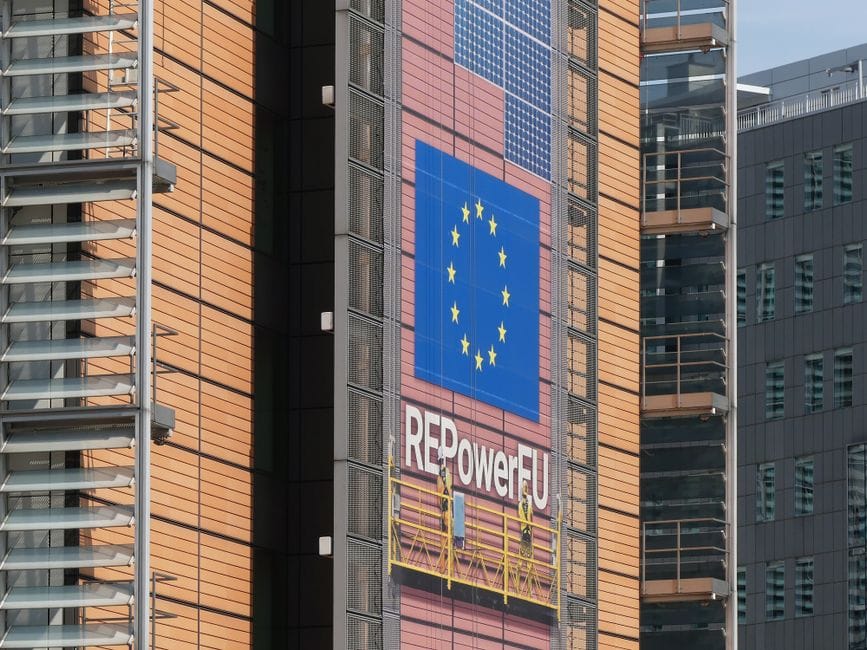
Featured image: Photo by Atypeek Dgn on Pexels
Members Discussion