
Science & Health
The Edible Equation: Promise, Complexity, and Gaps in the Literature
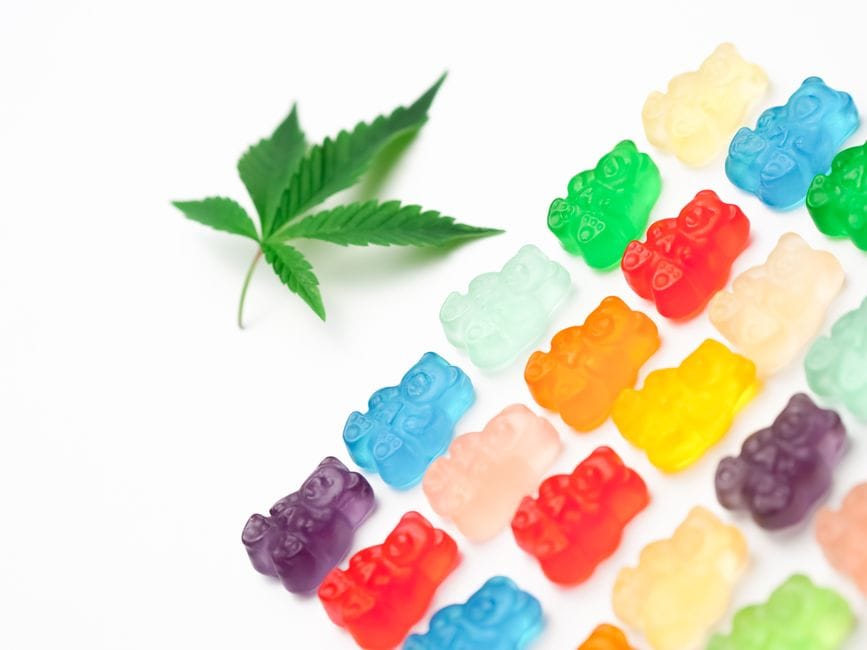
Cannabis-infused gummies have become one of the most visible consumer formats in legal and quasi-legal markets across Europe. Discreet, pre-dosed, and easy to consume, they appeal to a demographic that would never consider smoking. But as their popularity grows, a reasonable question follows: what does peer-reviewed science actually tell us about how CBD and THC behave when swallowed rather than inhaled?
The answer, drawn from a growing body of clinical and pharmacological research, is that oral cannabinoid delivery is both scientifically legitimate and considerably more complicated than most product labels imply.
Bioavailability: The Core Problem With Oral Cannabinoids
The most consistently documented challenge in the literature on oral cannabinoids is bioavailability — the proportion of an ingested compound that reaches systemic circulation in an active form. For THC consumed orally, studies published in peer-reviewed pharmacology journals have estimated bioavailability at between six and twenty percent, a wide range that reflects considerable variability between individuals and formulations.
Several factors drive this variability. Cannabinoids are lipophilic — they dissolve in fats, not water — and their absorption is heavily influenced by what else is in the stomach. A gummy consumed after a high-fat meal may deliver substantially more active compound than the same product taken on an empty stomach. First-pass metabolism in the liver further reduces and transforms what reaches the bloodstream: THC is partially converted to 11-hydroxy-THC, a metabolite that is itself psychoactive and, by some accounts, more potent than its precursor.
This metabolic transformation is part of why oral cannabis can produce effects that feel qualitatively different — and arrive far more slowly — than inhaled cannabis. Onset may range from thirty minutes to over two hours, a window that has contributed to well-documented cases of unintentional overconsumption when users, feeling nothing, take a second dose.
CBD Edibles: A More Modest Evidence Base Than Marketed
The research picture for CBD in edible form is, if anything, more contested. Epidiolex, the pharmaceutical-grade CBD formulation approved by the European Medicines Agency for rare epilepsy syndromes, is backed by robust randomised controlled trial data. But the evidence supporting the broader claims made for over-the-counter CBD gummies — stress relief, sleep improvement, general wellness — is considerably thinner.
A 2023 review published in Neuropsychopharmacology found that while CBD shows genuine anxiolytic effects in controlled laboratory settings, the translation of those effects to real-world oral dosing at the concentrations typically found in consumer products remains poorly established. The doses used in clinical trials are frequently far higher than those in commercial edibles, and the bioavailability issues that affect THC apply equally to CBD.
Researchers have also raised concerns about consistency between labelled and actual CBD content in commercially available products — an issue that has been documented in product testing across multiple European countries, including Germany and Italy.
Why Dosing Standardisation Matters
One area where the scientific literature is unambiguous is the importance of standardised, accurate dosing — particularly for THC. Research on therapeutic cannabinoid use consistently identifies the ability to titrate dose as a prerequisite for both safety and efficacy. Edibles complicate this in ways that smoked or vaporised cannabis does not: slower onset encourages re-dosing, and the conversion to 11-hydroxy-THC means the pharmacological profile differs meaningfully from inhalation.
For harm reduction practitioners, this translates into a concrete set of recommendations: start with the lowest available dose, wait a full two hours before considering any additional consumption, and account for food intake. These principles are already embedded in harm reduction guidance issued by organisations working in jurisdictions with regulated adult-use frameworks, and they are grounded in the pharmacological evidence.
Where the Research Needs to Go
The literature on oral cannabinoids is growing but remains uneven. There is strong mechanistic science explaining how cannabinoids are absorbed and metabolised. There is reasonable clinical evidence for specific therapeutic applications at pharmaceutical-grade doses. What is largely absent is rigorous, independent research on the consumer-grade edible formats that are actually circulating in European markets — products with variable formulations, inconsistent labelling, and users with widely differing tolerance levels and health profiles.
Until that gap is addressed, the science on CBD and THC edibles is best understood as a foundation for caution and informed consumption, not a blanket endorsement of the product category. The pharmacology is real. The complexity is equally real. Consumers — and the advocates and clinicians who support them — deserve to understand both.
Sources:
Diario AS
Featured image: Photo by Kindel Media on Pexels
Members Discussion