News
Seventy-nine percent. That is the share of cannabis consumers in the United States who say a candidate's stance on cannabis policy will influence how they vote — either significantly or somewhat — according to a new poll conducted by NuggMD, a cannabis telehealth platform, on behalf of NORML, the US-based National Organisation for the Reform of Marijuana Laws.
The figure is striking not because it surprises anyone already watching cannabis politics closely, but because of what it implies: in jurisdictions where cannabis consumers are a legally recognised constituency, they are beginning to act like one.
The survey, conducted among 654 cannabis consumers living in US states with legal markets, found the trend cuts across conventional political lines. Eighty-three percent of Democrats said candidates' cannabis policy stances would influence their vote. Among Republicans, the figure was 73 percent. Women came in at 81 percent; men at 76 percent. The poll carries a margin of error of ±3.83 percentage points.
A Constituency That Votes on the Issue
What the numbers describe is a bloc that is mobilising around a single-issue concern — not unlike how environmental voters, gun-rights advocates, or healthcare recipients have historically shaped electoral outcomes in specific races. The parallel is worth naming plainly: once a consumer group is legally recognised, it begins to develop political coherence.
This matters well beyond the United States. Europe is in the early stages of the same transition. Germany's partial liberalisation under the Cannabis Act came into force in 2024. Luxembourg, the Netherlands, and Switzerland are each running or planning regulated adult-use pilot programmes. Malta, through its decade of cannabis reform culminating in the 2021 framework under Chapter 628 of the Laws of Malta, already has a legally recognised adult-use population organised through Cannabis Harm Reduction Associations (CHRAs) — member-based, non-profit clubs licensed and supervised by ARUC (Authority on the Responsible Use of Cannabis), Malta's regulator for adult cannabis use.
As of 2024, several CHRAs are operational across Malta. Their members are registered adults. They are, in electoral terms, a knowable group — and one that has demonstrated sustained interest in how policy affects their access, their rights, and their daily lives.
The Trust Problem: A Lesson From the US
The NORML poll was accompanied by a second, separate tracking survey showing that cannabis consumers' approval of the current US administration's handling of cannabis policy has dropped sharply — from 73 percent approval in early 2024 to just 29 percent in the most recent quarterly measurement. A federal rescheduling proposal that raised expectations has stalled amid procedural delays, and consumers appear to be noticing.
This second data point is arguably the more instructive one for European policymakers. It suggests that simply signalling openness to cannabis reform is not enough to retain the political confidence of consumers who are paying attention. Implementation pace matters. Transparency matters. When reform promises sit idle in administrative queues, the constituency that welcomed them does not stay patient indefinitely.
In Malta's case, ARUC has been navigating the ongoing work of building a regulatory framework largely from scratch — issuing directives on testing requirements, packaging, security, and CHRA governance in a jurisdiction with no existing template to follow. That work is slow by nature. The question is whether Maltese adult cannabis consumers — now a legally defined group with registered membership — will begin applying the same political calculus that US consumers appear to be applying to their own officeholders.
What European Politicians Are Learning
Across the Mediterranean, cannabis reform has moved from being a marginal platform issue toward a mainstream policy conversation. In Italy, reform campaigns have gathered millions of referendum signatures in recent years, though without clearing the constitutional threshold required to force a vote. In France, a series of parliamentary reports have examined regulated models without producing legislation. In Spain, cannabis social clubs — associations that inspired parts of Malta's CHRA model — operate in a legal grey zone that successive governments have failed to resolve into clear policy.
In each case, a large and largely unaddressed consumer population exists. Whether it eventually organises politically, as US consumers appear to be doing, may depend on one factor the NORML poll quietly highlights: visibility. Consumers in US states with legal markets know they exist as a constituency. In European countries where cannabis remains criminalised or tolerated only informally, that self-awareness is harder to build.
Malta's framework — imperfect and still evolving as it is — does something politically significant: it makes adult cannabis consumers visible as a group. They hold membership cards. They interact with a named regulator. They attend association meetings. That visibility is the precondition for political voice.
The insight from this week's US polling is less about American elections than about what happens when a previously marginalised consumer group gains legal standing. The data suggests they start voting like it. European cannabis reform advocates and policymakers alike would do well to read those numbers — not as a foreign curiosity, but as a preview.
For candidates on either side of the debate, the takeaway is the same: a constituency that was once easy to ignore is learning that it does not have to be.
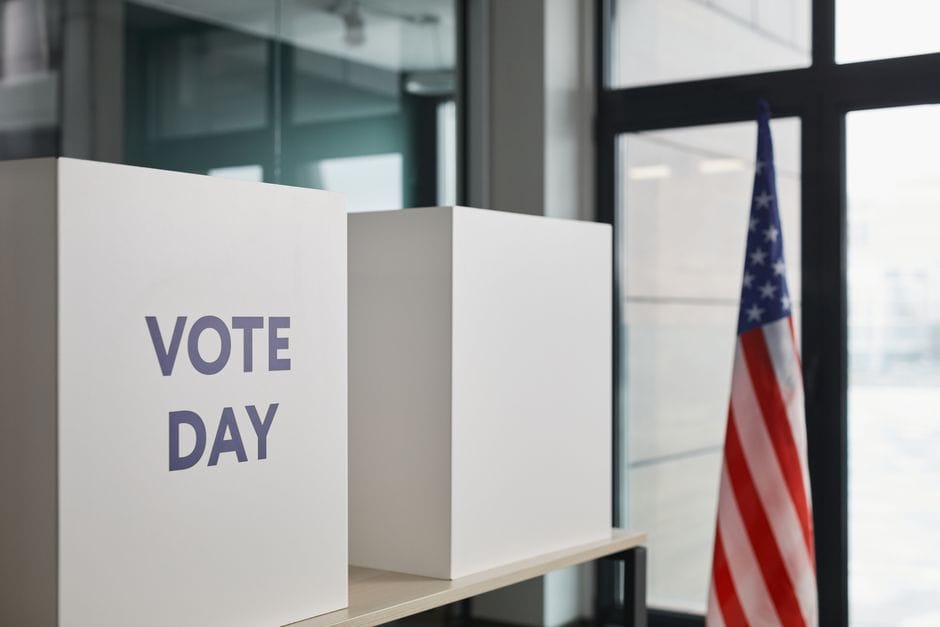
Featured image: Photo by Edmond Dantès on Pexels
Members Discussion