News
Twelve months ago, a gram of legal cannabis flower in Germany cost considerably more than it does today. According to data reported by Business of Cannabis, average flower prices in the German market have fallen by 22% over the past year — while the number of distinct products available has surged by 73%, a jump that reflects just how quickly a liberalised European market can diversify once supply chains begin to mature.
The two numbers belong together. More competing products push prices down. More price competition encourages producers to differentiate on quality, cannabinoid profile, and origin rather than simply on scarcity. It is a dynamic familiar from any consumer goods market, but it is arriving in European cannabis rather faster than many analysts anticipated when Germany passed its landmark reform legislation in 2024.
What the Price Drop Actually Means
A 22% price reduction is not trivial, but context matters. Legal cannabis in Germany was priced at a significant premium when the market opened, partly because licensed supply was constrained and partly because early adopters were willing to pay for legality and product transparency. The price correction suggests that supply is now catching up with demand — and that consumers are beginning to exercise genuine choice rather than simply buying whatever is available.
The SKU explosion — SKU meaning stock-keeping unit, the industry shorthand for a distinct product line — tells a parallel story. A 73% rise in available products over a single year indicates that producers and importers are racing to fill shelf space and differentiate their offerings. Formats, strain varieties, THC-to-CBD ratios, cultivation methods, and country of origin are all becoming active points of competition in a way they simply could not be when the market was supply-constrained.
For consumers, that is straightforwardly good news: more choice, lower prices, and — in a well-regulated environment — better labelling and testing standards that make informed decisions possible. For producers, particularly smaller ones, it signals an intensifying market where margins will compress and brand differentiation will become essential to survival.
A European Benchmark Taking Shape
Germany is not just any European market. With a population of roughly 84 million and a central position in the EU's supply and logistics networks, it functions as a de facto benchmark for European cannabis commerce. What happens to prices and product ranges in Germany tends to signal what will happen elsewhere — not immediately, and not uniformly, but directionally.
That matters for smaller Mediterranean jurisdictions watching from the sidelines. Malta's 2021 cannabis reform — which established a harm-reduction framework built around licensed Cannabis Harm Reduction Associations (CHRAs) and regulated adult-use cannabis, overseen by ARUC (Authority on the Responsible Use of Cannabis) — was designed around a non-commercial, member-based model rather than a retail market. The logic was deliberate: prioritise access and harm reduction over commercial scale.
But Maltese consumers and CHRA operators are not insulated from broader European price signals. If legal cannabis becomes markedly cheaper and more varied in neighbouring European markets, the pressure on Malta's framework to evolve — whether toward broader product diversity, adjusted pricing guidance, or expanded cultivation volumes — will grow. The question our full Malta cannabis policy timeline makes plain is that Malta has consistently adapted its approach in response to what the evidence and the market show, rather than standing still.
Quality, Not Just Price
There is a risk embedded in rapid price compression that is worth naming plainly. When markets flood with competing products and margins shrink, quality control becomes harder to enforce and easier to cut corners on. The German regulatory framework requires testing and labelling standards that should, in theory, prevent a race to the bottom. But regulators across Europe will be watching whether cheaper products maintain the cannabinoid accuracy and contaminant standards that consumers and healthcare professionals rely on.
For harm-reduction advocates, the price story is secondary to the safety story. A well-regulated gram at a lower price is better than an unregulated gram at any price — that case is not difficult to make. The harder question is whether regulatory infrastructure can scale as fast as SKU counts do.
Germany's market is, in that sense, an experiment running in real time. The results — in price, quality, consumer behaviour, and public health data — will inform cannabis policy debates from Lisbon to Nicosia for years to come. Malta, modest in scale but attentive in its regulatory approach, would do well to watch closely.
Cheaper cannabis and more of it: that sounds like good news. Whether it stays good news depends entirely on what comes with it.
Sources:
Business of Cannabis
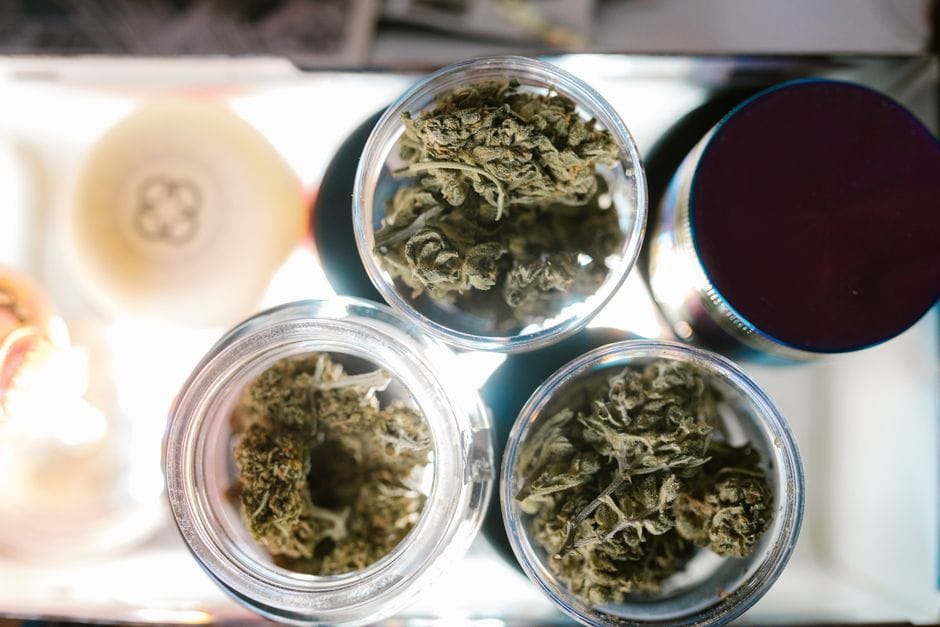
Featured image: Photo by RDNE Stock project on Pexels
Members Discussion