News
Twenty milligrams of THC, precisely measured, tested for heavy metals and pesticide residues, dispensed with a patient information leaflet. That is what a legal medical cannabis supply chain looks like. The alternative — an unregulated market — offers none of those guarantees. And yet a persistent argument in European policy debates continues to frame legalisation as the risky option, as though the status quo were somehow protecting patients.
It is not. And the evidence is worth examining carefully, particularly as Mediterranean countries continue to reshape their approaches to both medical cannabis access and adult-use frameworks.
The Regulatory Paradox
The concern, when stated plainly, goes roughly like this: legalising cannabis — whether for medical or adult use — normalises the substance, weakens public health messaging, and ultimately exposes more people to harm. It is an argument made in good faith by cautious health professionals and some drug policy researchers. But it rests on an assumption that prohibition functions as a working barrier between the public and cannabis.
That assumption does not survive much scrutiny. European Union Drugs Agency (EUDA) data consistently show that cannabis remains the most widely consumed controlled substance across the EU, in countries with strict prohibition and in countries with liberalised frameworks alike. The regulatory status of cannabis has not historically determined its availability. What regulation does determine is the quality, consistency, and safety of the product that reaches consumers — and the information environment surrounding its use.
Legal medical cannabis supply chains require standardised cultivation, laboratory testing for cannabinoid profiles (the specific mix of active compounds in a given product), contamination screening, and traceable chain of custody from producer to patient. Unregulated supply chains offer none of this. A patient sourcing cannabis outside a legal framework has no reliable way to know what they are consuming, at what potency, or whether the product contains residual solvents, mould, or pesticide contamination.
What Malta's Framework Signals
Malta occupies an instructive position in this conversation. Since Malta's 2021 cannabis reform — which introduced a decriminalisation and Cannabis Harm Reduction Association (CHRA) framework for adult-use cannabis alongside an existing medical pathway — the country has built one of the more structured regulatory environments in the Mediterranean. ARUC (Authority on the Responsible Use of Cannabis), Malta's statutory regulator for adult-use cannabis, operates a licensing and compliance system that includes mandatory product testing and strict operational requirements for licensed associations, as detailed in our CHRA regulations guide.
The medical and adult-use frameworks remain legally distinct in Malta — a distinction worth preserving, since patient access and therapeutic oversight carry different requirements than the CHRA model. But both share a foundational logic: that a regulated, visible, accountable supply is safer than an invisible one.
For healthcare professionals treating Maltese patients who use cannabis — whether or not through formal medical channels — the existence of a regulated framework creates a better clinical environment. Patients in a legal system are more likely to disclose their cannabis use to a doctor. Doctors can discuss dose, frequency, and interaction risks with greater confidence when they know roughly what products are available. That conversation is much harder when cannabis is entirely unregulated and stigmatised.
The Harm Reduction Logic
Harm reduction — the public health approach of minimising risks associated with a behaviour rather than demanding abstinence — has been the organising philosophy behind Malta's cannabis policy design and behind the CHRA model specifically. CHRAs are not shops. They are non-profit membership associations designed to provide a supervised, accountable space for adult cannabis consumption, with education and community embedded in their structure.
Critics of cannabis liberalisation sometimes treat harm reduction as a euphemism for permissiveness. The actual harm reduction literature suggests the opposite: that regulation creates the conditions under which risks can be identified, communicated, and reduced — and that prohibition tends to push consumption into settings where none of that is possible.
A 2024 report from the European Monitoring Centre for Drugs and Drug Addiction (now operating as EUDA) noted that illicit cannabis markets in Europe continue to show increasing product potency and decreasing consistency, trends that carry genuine public health implications. A regulated market can set potency thresholds, require labelling, and mandate consumer information. An illicit market cannot.
The Conversation Europe Needs
Across the Mediterranean — in Italy, where cannabis social clubs operate in a contested legal grey zone, in France, where a medical cannabis pilot has run since 2021, in Greece, where medical production has expanded considerably — the policy direction is broadly toward more regulation, not less. The debate is no longer whether to regulate but how.
That shift makes the old framing — that legal equals dangerous, that prohibition equals protection — increasingly difficult to sustain. The more productive question is what good regulation looks like: what testing standards it requires, what information it mandates, how it handles vulnerable populations, and how it integrates with healthcare systems.
Those are hard questions with genuinely contested answers. But they are the right questions. The idea that keeping cannabis illegal protects public health is not a conservative instinct — it is an evidence-free one. And in a policy environment that is finally starting to take the evidence seriously, it deserves to be treated as such.
The safest cannabis product is the one you know exactly what is in it.
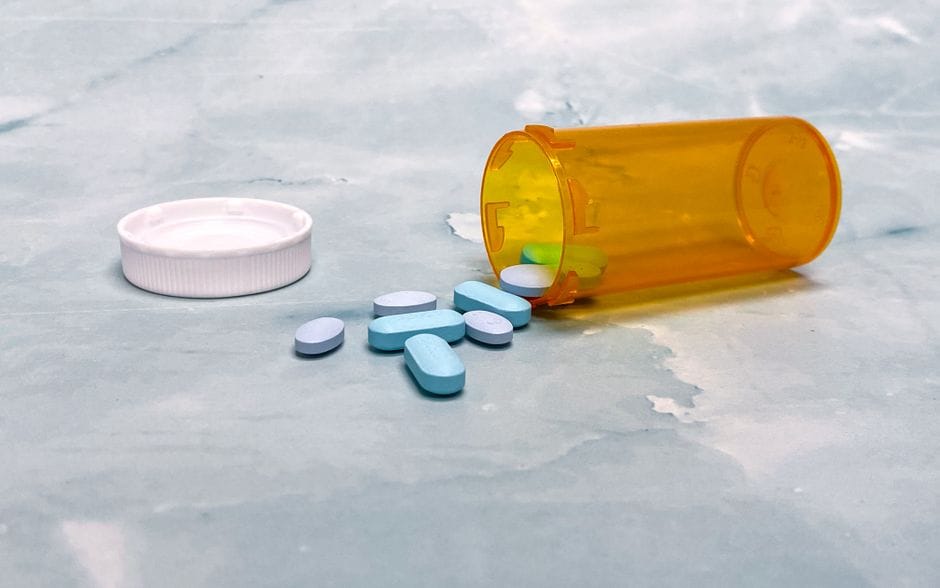
Featured image: Photo by Etatics Inc. on Pexels
Members Discussion