Industry & Intelligence
Nine hundred and eleven. That is how many US medical cannabis dispensaries woke up on the morning of 31 October holding something no cannabis business in American history had ever held before: a federal registration. No fireworks accompanied the announcement. No presidential address. Attorney General Todd Blanche issued a Department of Justice statement, the DEA updated a spreadsheet, and the industry reached for its calculators.
The milestone matters. But the closer you read the details, the more the picture complicates itself.
What Actually Changed on 30 October
The Drug Enforcement Administration's (DEA) registrations are the first concrete result of a partial rescheduling order issued in April 2026, which moved cannabis from Schedule I — the most restricted category, reserved for substances deemed to have no accepted medical use — to Schedule III under the US Controlled Substances Act. The practical upshot of Schedule III classification that operators will feel most immediately is relief from Section 280E of the US tax code, a provision that had long barred cannabis businesses from deducting ordinary business expenses because they were handling a Schedule I substance. For a dispensary operating on thin margins, 280E relief can be the difference between solvency and closure.
The registrations announced by Blanche cover businesses across seven states: Alabama, Florida, Mississippi, South Dakota, Texas, Virginia, and West Virginia. Six of the seven run medical-only programmes. Virginia has legalised adult-use cannabis but has not yet begun licensing under that framework. The DOJ described the announcement as the “first phase” of a phased registration process, with manufacturer and distributor applications still pending facility inspections, production controls, and quota determinations.
Seven States, 66 Applications — and 6,934 Still Waiting
Here is where the headline figure starts to shrink. According to the DEA's own timely-applicant list — posted on 29 October and updated daily — close to 7,000 applications are pending across 42 states, Washington DC, and Puerto Rico. The seven states where registrations were granted account for just 66 dispensary applications between them, according to a state-by-state audit of the 1 November snapshot by Easy Rx Cycle, a compliance consultancy.
The contrast with the larger states is stark. Oklahoma alone has 2,442 pending applications, including 939 dispensaries and 1,158 manufacturers. California has 771. Arizona, Maryland, Colorado, Nevada, Washington, and Massachusetts each report between 108 and 168. Florida — the only DOJ-approved state to reach three figures — has 108 pending applications. Alabama filed two in total. Texas, six. South Dakota, thirteen.
The pattern is not subtle: the states that received the first federal registrations are, almost without exception, the states with the fewest applicants. The operators carrying the bulk of the US medical cannabis industry remain in the queue.
Minnesota and the Dual-Licence Problem
The more structurally significant development may not be the registrations themselves but a DEA order to show cause issued to a Minneapolis dispensary, In-Dispensary. The order sets out three independent grounds for refusing federal registration — and each one points to a tension that could affect hundreds of operators across multiple states.
The first concerns Minnesota's dual-purpose cannabis business licence, which allows the same entity to sell to both medical patients and adult retail customers. The DEA argues that this structure falls outside the federal definition of a “state medical marijuana license” and that dispensing for adult-use purposes under it constitutes “per se diversion of a Schedule III controlled substance.” The second ground targets Minnesota's provision allowing military veterans to enrol in the state medical cannabis registry — the DEA argues this bypasses the written-certification requirement. The third concerns products: Minnesota dispensaries sell artificially derived cannabinoid products that the DEA treats as synthetic cannabis, which the April 2026 order left in Schedule I. Dispensing them without a separate Schedule I registration, the order concludes, “violates the CSA and constitutes diversion.”
The Minnesota Office of Cannabis Management told the Star Tribune that the order does not affect state law and that medical cannabis remains available to patients. The office said it had received no direct DEA communication.
For dual-licence states — where adult-use and medical frameworks have been deliberately merged — the Minnesota order signals a fundamental incompatibility with how the federal Schedule III framework has been constructed. It is not a quirk of Minnesota's rules; it reflects a structural mismatch between states that have moved toward unified cannabis regulation and a federal system that still requires a clean separation between medical and non-medical supply chains.
A Deadline That Concentrates the Mind
Alongside the registration announcement, the DEA published an informational letter setting out trading rules for its new Schedule III framework. The letter — which the agency itself concedes “does not have the force and effect of law” — directs timely applicants and existing registrants to have compliant supply chains in place by 29 November 2026. From that date, those operators may not conduct Schedule III activities with any entity that did not file a qualifying DEA application in the original 28 April to 26 June window. Non-qualifying trading could be grounds for denying a pending application or revoking an existing registration.
The practical effect: operators in dual-licence states face not just an uncertain registration outcome but a closing window during which they must decide whether and how to restructure their businesses to fit a federal framework that may not accommodate how they are currently licensed at state level.
What This Looks Like From Europe
For European observers — and for Malta's emerging regulated cannabis sector in particular — the American episode is instructive less as a model and more as a cautionary tale about sequencing. Malta's 2021 cannabis reform, which established the Cannabis Harm Reduction Association (CHRA) framework — a licensed, non-profit model for adult-use cannabis distribution — was designed from the outset around a single, coherent regulatory architecture. Our guide to Malta cannabis law outlines how that framework separates adult-use and medical cannabis pathways at the structural level, a separation that the DEA's Minnesota order suggests the US is now attempting to enforce retroactively in states that had moved in the opposite direction.
The European Union Drugs Agency (EUDA) has been tracking harm reduction frameworks across member states with increasing attention to how legal frameworks handle the adult-use and medical distinction. The US experience — a federal agency issuing registrations to fewer than 1% of applicants while simultaneously challenging the licence structures of its largest markets — is unlikely to go unnoticed in Brussels or Valletta.
Nine hundred registrations is a number worth celebrating if you hold one. For the 6,000-plus operators still on the list, 30 October was a clearer signal of how far the process has to go than of how far it has come. The real test of US federal cannabis regulation will arrive not when the first handful of compliant states receive their paperwork, but when the DEA has to decide what to do with California and Oklahoma — and whether it is prepared to say, plainly, that the way those states built their industries is incompatible with federal law as currently written.
That conversation has not happened yet. The November 29 deadline may force it.
Sources:
Business of Cannabis — https://businessofcannabis.com/dea-issues-first-federal-registrations-to-900-dispensaries-but-dual-licence-states-remain-uncertain/
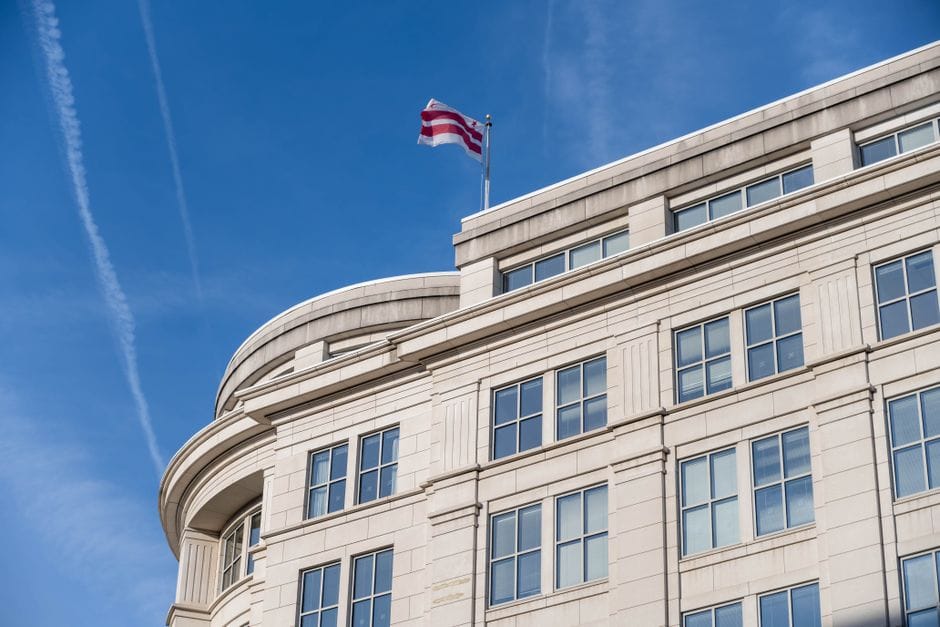
Featured image: Photo by Quang Vuong on Pexels
Members Discussion