
News
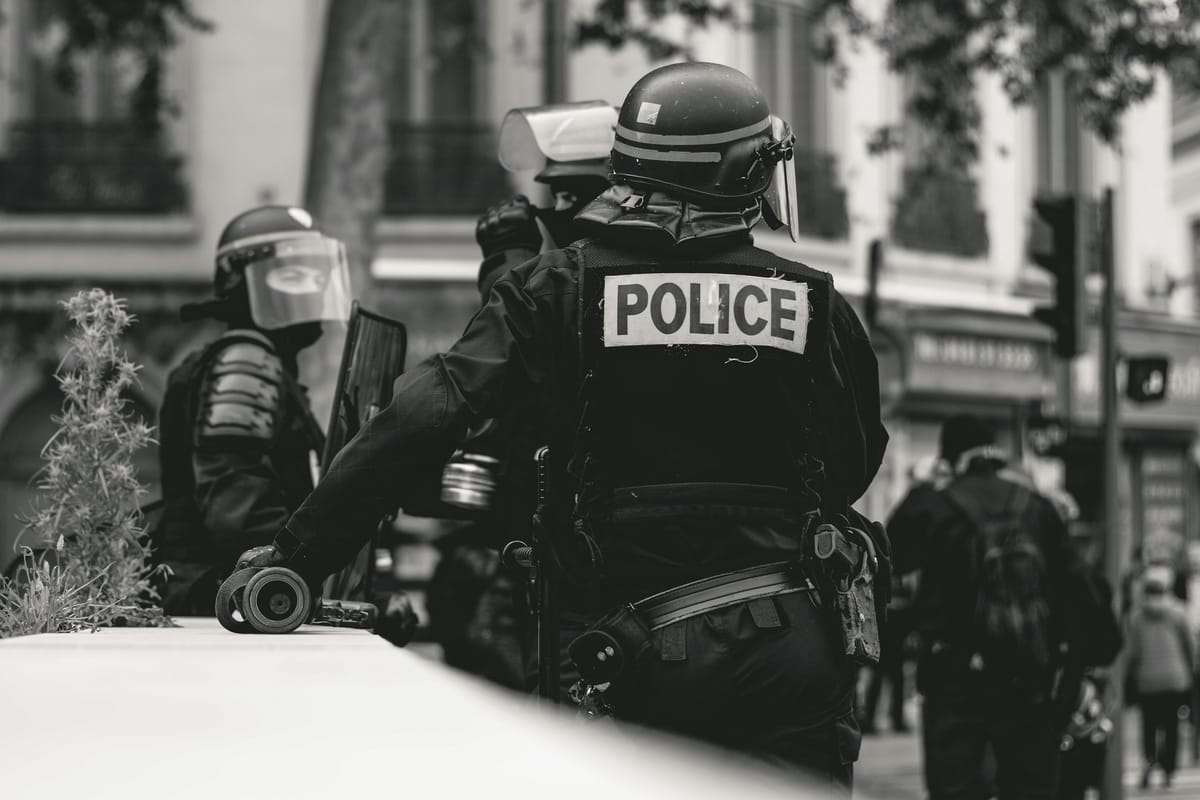
Arrests Continue Despite Legalisation Wave
More than 200,000 people were arrested for cannabis possession in the United States in 2025, according to data published by the Federal Bureau of Investigation (FBI) in its annual crime report. A further 17,000 individuals were arrested for alleged cannabis sales or cultivation, bringing the total number of marijuana-related arrests to roughly 218,000 for the year — an increase on the 204,000 recorded in 2024.
The figures are striking not simply for their scale, but for their context: the United States now has 24 states that have legalised and regulated adult-use cannabis, covering a substantial portion of the national population. Yet cannabis possession arrests still account for approximately one quarter of all drug arrests nationwide — more than any other individually listed substance — with 92 percent of cannabis incidents involving possession alone.
For observers watching cannabis policy from Europe, the data offers a sobering illustration of a core tension in piecemeal reform: decriminalisation and legalisation at the sub-national level does not eliminate enforcement disparities, particularly where federal law and inconsistent local policing practices persist.
A Downward Trend With a Caveat
Advocacy organisations have been quick to point out that, notwithstanding the year-on-year uptick, the broader trajectory over the past decade is one of decline. Paul Armentano, deputy director of the National Organisation for the Reform of Marijuana Laws (NORML), acknowledged the trend but cautioned against complacency.
"While the number of marijuana-related arrests has trended downward for the better part of the past decade, in large part due to 24 states legalising and regulating cannabis for adults, it is clear that marijuana-related prosecutions still remain a primary driver of drug war enforcement in the United States. Hundreds of thousands of Americans continue to be arrested annually for low-level cannabis-related violations even though a majority of voters no longer believe that the responsible use of marijuana by adults should be a crime."
Armentano further described the criminalisation of cannabis as "a terribly destructive policy that disrupts lives and has lasting consequences," noting the disproportionate impact on younger, lower-income, and minority communities who are more likely to face arrest and carry the long-term burden of a criminal record.
Unreliable Data Complicates the Picture
The FBI's figures come with significant caveats. Approximately 13 percent of state and local law enforcement agencies did not submit data for the 2025 reporting period, meaning the published totals are based on extrapolation rather than a complete count. The FBI itself acknowledges that it uses a "standard estimation procedure" to account for missing submissions.
More troublingly, the report contains internal inconsistencies that undermine confidence in the data. Different sections of the same document list total drug offence figures of 1,492,005, 1,656,774, and 1,958,377 — under identical headings. Drug abuse violation arrest totals similarly vary across tables, ranging from 754,497 to 845,031. The FBI has not publicly explained these discrepancies.
These inconsistencies are not a new problem. In 2022, a former congressional staffer identified that at least one state police department had been recording cannabis possession citations issued under a decriminalisation law as full arrests when reporting to the FBI — a classification error that, if replicated elsewhere, could meaningfully distort the national picture. It remains unclear how widespread similar reporting errors may be.
The reliability of this data matters beyond the numbers themselves. FBI arrest statistics are used by legislators, academic researchers, public health bodies, and journalists to assess the scope of drug enforcement and to inform policy decisions. Errors in methodology do not remain contained within spreadsheets — they flow into how governments understand and respond to drug use at every level.
A Reference Point for European Reform Debates
While the United States and Europe occupy different legal and cultural contexts, the FBI dataset holds relevance for ongoing cannabis policy discussions across the continent. The core question it raises — whether criminalisation continues to cause measurable social harm even as reform advances — is one that European policymakers, harm reduction practitioners, and civil society groups are actively grappling with.
Germany's partial legalisation framework, which came into force in 2024, explicitly cited harm reduction and the reduction of criminalisation as primary policy goals. Similar arguments have underpinned reform conversations in France, the Netherlands, and elsewhere. The persistence of large-scale possession arrests in the United States — despite significant state-level legalisation — demonstrates that legal change at one tier of governance does not automatically translate into protection from enforcement at another.
For jurisdictions where personal possession remains a criminal or administrative offence, the American data provides an empirical reference point: enforcement does not disappear on its own, and its costs fall unevenly across populations.
Sources:
Marijuana Moment — https://www.marijuanamoment.net/more-than-200000-people-were-arrested-for-marijuana-possession-in-the-u-s-last-year-fbi-data-shows/
Featured image: Photo by FounderTips . on Pexels
Members Discussion