
Industry & Intelligence
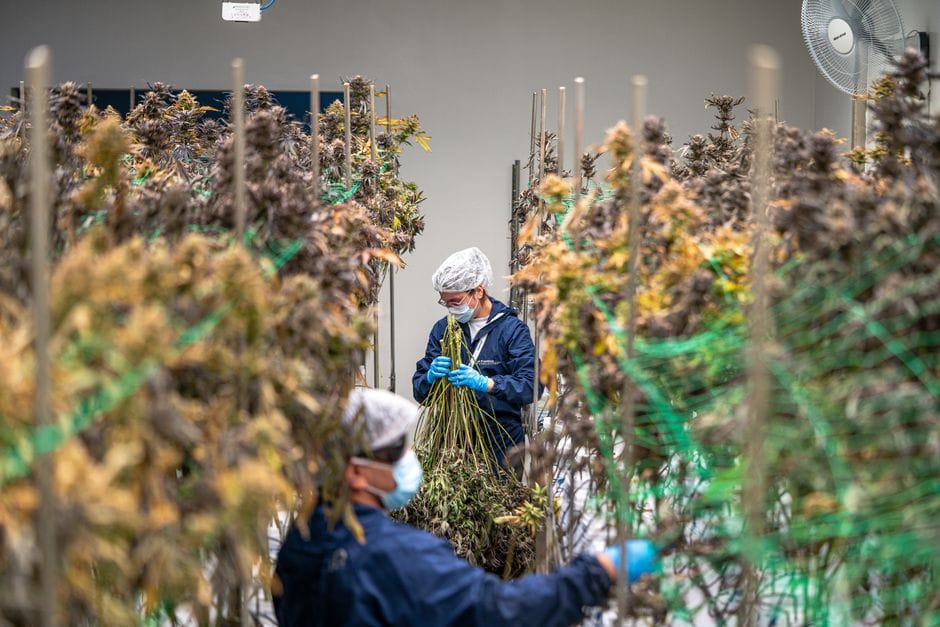
The harvest is a milestone, not a finish line
In discussions about medical cannabis quality, the conversation almost always gravitates toward cultivation: lighting regimes, genetics, nutrient schedules, the cannabinoid and terpene targets being pursued during the grow. What happens once a crop is cut tends to receive far less attention. That is a meaningful omission, because the post-harvest process — drying, curing, quality checking, and controlled storage — is where weeks of carefully managed cultivation can either be preserved or quietly destroyed.
A detailed account from Glass Pharms, a UK-based licensed medical cannabis cultivator, offers a useful window into how seriously the industry's more rigorous operators approach this largely invisible phase. The description, provided by the company's CEO James Duckenfield, outlines a process built around pharmaceutical consistency rather than artisanal convention — and it draws a sharp line between methods that are scientifically grounded and terminology that can be used loosely in commercial communications.
Water activity: the metric that matters
One of the more technically precise elements of the Glass Pharms approach is its focus on water activity (aw) rather than simple moisture content. The distinction is not semantic. Water activity measures the proportion of water within the flower that is freely available to support microbial growth or chemical degradation — not merely the total amount of water present. A flower can carry residual moisture and still be microbiologically stable, provided its water activity is brought to a safe threshold.
Glass Pharms targets an aw of 0.60 during the drying phase. Below that level, mould, bacteria, and yeast lose the conditions they need to proliferate. Above it, even briefly, and the risk profile of the batch changes significantly. The challenge, as Duckenfield frames it, is that drying too rapidly carries its own cost: the volatile terpene and cannabinoid compounds that define both the therapeutic character and the sensory profile of the flower begin to degrade before they have been stabilised.
"Dry too fast, and you risk degrading the terpene and cannabinoid profile. But if you dry too slowly, the remaining available water can create more favourable conditions for mould growth."
It is a constraint that any producer working with natural plant material in a pharmaceutical context will recognise. There is no universal setting that works for every cultivar or every batch. The process has to respond to what the material actually needs.
Curing: the phase that closes the gap
Where drying is primarily about microbial safety and cannabinoid preservation, curing serves a different function. After the drying stage concludes, there is typically an imbalance between moisture levels at the surface of the flower and at its core. Curing — a slower, sensor-monitored process lasting two to three weeks or longer depending on the batch — allows that disparity to resolve. The whole flower equilibrates to a consistent, shelf-stable moisture level, chemical reactions that were still ongoing during drying reach completion, and the harshness that characterises freshly dried material gradually subsides.
Critically, Glass Pharms does not apply a fixed timetable to curing. Different cultivars and different batches are allowed to run their course. This is presented not as flexibility but as a pharmaceutical requirement: the product is a variable natural material being brought to a fixed standard, and forcing it through a rigid schedule risks releasing flower that has not yet reached that standard.
For clinicians prescribing a product repeatedly to the same patient, and for patients who have found a specific product that manages their condition effectively, this kind of batch-to-batch consistency is not a quality-of-life concern — it is a clinical one.
The terminology problem in medical cannabis
The Glass Pharms account is also notable for what it explicitly rejects: freeze-drying. The company states it has never used the technique, and the reason given is instructive. In some parts of the medical cannabis industry, freeze-drying and conventional drying methods are discussed interchangeably, as though they produce equivalent results. They do not. Freeze-drying removes moisture through sublimation under vacuum conditions, which operates on fundamentally different principles and produces a structurally different product. Whether that difference is clinically meaningful in all contexts is a separate debate, but describing the two as equivalent is, at minimum, imprecise.
The point matters because loose terminology in regulated industries creates problems. If clinicians or procurement bodies cannot easily determine what process was used to produce a given medical cannabis product, meaningful comparison becomes difficult, and the assumptions underpinning prescribing decisions are less reliable.
Relevance to European medical cannabis supply chains
While the Glass Pharms operation is UK-based, the technical and regulatory questions it raises are directly relevant to the broader European medical cannabis market, including supply chains that reach Malta. The island's medical cannabis patients access imported flower products through pharmacy dispensing, meaning the post-harvest standards applied by cultivators upstream have a direct bearing on product quality at the point of prescription.
As European regulators and national authorities continue to develop and refine quality standards for medical cannabis flower, the granular science of post-harvest processing deserves to sit alongside cultivation standards in those frameworks. What happens after harvest is not a secondary concern. In many respects, it is where the therapeutic promise of the plant is either delivered or lost.
Sources:
Duckenfield, J. "The science of the cannabis post-harvest process." Business of Cannabis. https://businessofcannabis.com/the-science-of-the-cannabis-post-harvest-process/
Featured image: Photo by Diego Barros on Pexels
Members Discussion