
Industry & Intelligence
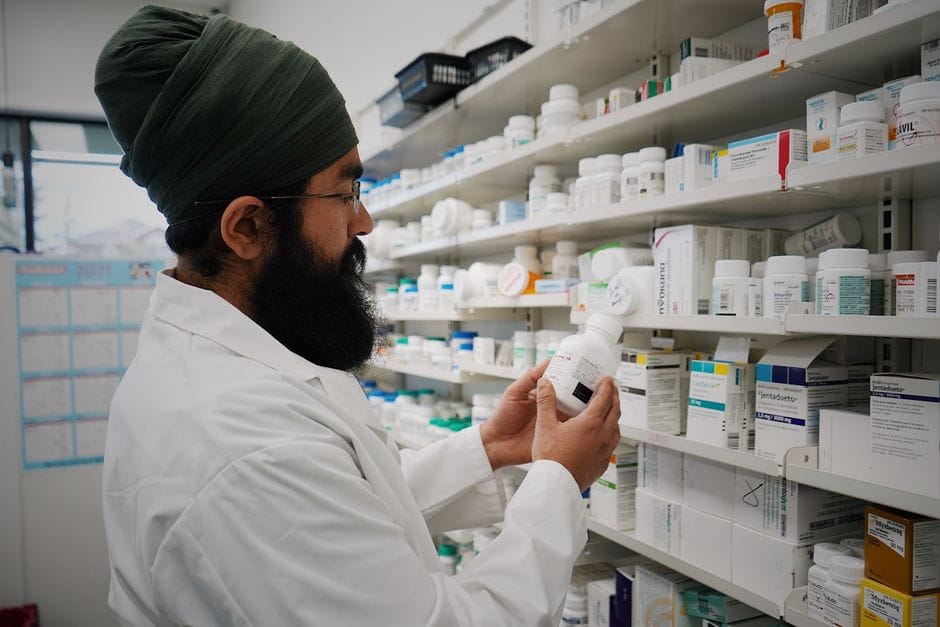
A Market That Outran Its Own Forecasts
When the United Kingdom legalised medical cannabis in November 2018, the rollout was slow, cautious, and — in the eyes of many advocates — unnecessarily difficult. Specialist clinicians were few, NHS prescribing was essentially non-existent, and patients who could not afford private consultations were left behind. It looked, for several years, like a liberalisation that existed largely on paper.
That picture has changed substantially. Industry observers now describe the UK medical cannabis market as growing faster than anyone anticipated, with private prescriptions climbing year on year, the number of registered specialist clinicians expanding, and a patient population that is becoming increasingly aware of its legal options. According to reporting by Business of Cannabis, the phrase being used inside the industry is that growth has come "faster than anyone expected."
The product range has also matured. Where the early market was dominated by imported flower and a narrow band of oils, UK-licensed suppliers now offer a wider formulary, and domestic cultivation — still restricted — is edging forward. For a country that does not belong to the EU single market, Britain has quietly constructed one of the more functional medical cannabis ecosystems in Europe.
The Private-Prescription Engine
The structural driver behind this growth is worth understanding: the UK market runs almost entirely on private prescriptions, bypassing the chronic delays that afflict state reimbursement systems elsewhere. Patients pay out of pocket — often significant sums — but they receive prompt access. Critics rightly point out that this creates a two-tier system in which lower-income patients are excluded. Proponents argue that the private route has at least proven that demand is real and that the medical infrastructure can handle it.
That tension — speed and access versus equity — is one that every European jurisdiction grappling with medical cannabis reform must eventually confront. Germany, which launched its pharmacy-dispensing model in 2017 and has since overhauled its adult-use framework, chose a different path: pushing hard for statutory health insurance coverage, with mixed results in terms of prescribing volumes. France is still running a national pilot programme years after its launch. Italy permits medical cannabis but leaves supply perpetually constrained by a military-run production monopoly.
Each model carries trade-offs. What the UK example demonstrates is that removing bureaucratic friction from the prescribing chain — even if the cost burden falls on patients — can produce rapid uptake once awareness reaches a tipping point.
Where Malta Fits Into This Picture
Malta occupies an instructive position in this European patchwork. As the first EU member state to legalise personal adult-use possession and home cultivation, in December 2021, it moved ahead of nearly all its neighbours on recreational reform. But medical cannabis access remains a more complicated story domestically.
ARUC, the Authority on the Responsible Use of Cannabis, oversees the non-commercial framework that governs Cannabis Harm Reduction Associations — the CHRAs — as well as broader regulatory matters. The medical pathway, however, sits within the healthcare system and has historically involved its own set of access hurdles: limited prescriber familiarity, importation dependencies, and formulary gaps that patients and advocacy groups have flagged repeatedly.
The UK trajectory offers a useful data point for Maltese policymakers: when regulatory uncertainty is reduced and prescribers are given clear guidance, clinical uptake can accelerate quickly. Malta's healthcare authorities and ARUC would benefit from examining not just the UK's outcomes, but its mechanisms — specifically how specialist prescriber training was expanded and how patient registries were built to track outcomes over time.
What a Maturing Market Looks Like
Perhaps the most significant signal from the UK is qualitative rather than quantitative. The normalisation of medical cannabis within a professional clinical context — where GPs refer to specialists, where pharmacies stock product, where repeat prescriptions are processed without drama — represents a maturation that many continental markets have not yet achieved.
That normalisation matters because it shifts the conversation away from whether medical cannabis belongs in healthcare systems and toward how it should be integrated. Patient outcomes data from the UK's largest private providers, some of which is being published in peer-reviewed journals, is beginning to contribute meaningfully to the evidence base on conditions like chronic pain, anxiety disorders, and treatment-resistant epilepsy.
For a publication read by healthcare professionals and policy observers across Malta and the broader Mediterranean, the lesson is not that every jurisdiction should replicate the British private-pay model — it almost certainly should not. The lesson is that market design matters enormously, and that well-intentioned frameworks which leave patients navigating labyrinthine approval processes will consistently underperform relative to their potential.
Britain stumbled into a functioning market somewhat accidentally, through a combination of private sector energy and regulatory pragmatism. The rest of Europe has the advantage of being able to learn from that experience rather than repeat it.
Sources:
Business of Cannabis
Featured image: Photo by World Sikh Organization of Canada on Pexels
Members Discussion