
News
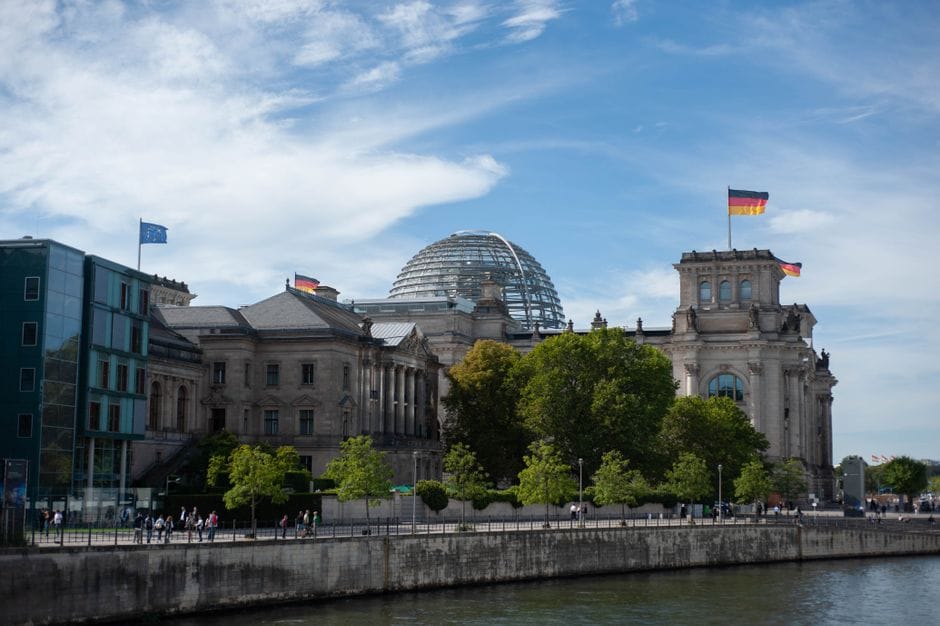
Germany Consolidates Its Position as Europe's Largest Medical Cannabis Market
Germany has long been the most closely watched cannabis market on the continent, and developments in its regulatory framework continue to draw attention from producers, patients, and policymakers across Europe. Tilray Medical, one of the largest international cannabis operators with a significant footprint in European markets, has publicly welcomed progress in Germany's approach to medical cannabis access — and called for continued policy development to support patients and industry alike.
The company's statement, issued in mid-2025, praised what it characterised as meaningful advances in the structures governing how medical cannabis is prescribed, reimbursed, and supplied in Germany. While short on specific legislative detail, the message was clear: major operators believe the German framework is moving in a direction that rewards compliance and creates a more predictable business environment.
From Scheduling Reform to Prescription Access
Germany's relationship with medical cannabis has evolved considerably since it first legalised cannabis-based medicines in 2017. A pivotal moment came in early 2024 when the German government passed the Cannabis Act (Cannabisgesetz), which among other things removed cannabis from the country's list of prohibited narcotics. This reclassification had downstream effects on medical prescribing — reducing some of the bureaucratic friction that had historically made German physicians reluctant to prescribe cannabis products even when clinically appropriate.
The number of patients accessing medical cannabis in Germany has grown substantially year-on-year, and the market is now estimated to be the largest in Europe by volume. International suppliers, including Canadian and Dutch-origin operators with EU-GMP certification, have benefited from this growth — though competition has also intensified.
Tilray Medical's public endorsement of Germany's direction appears designed, at least in part, to signal to regulators that the industry supports — rather than merely tolerates — a structured, patient-centred framework. Whether that framing resonates in Berlin policy circles remains to be seen.
What European Momentum Means Beyond Germany
Germany's regulatory evolution does not occur in a vacuum. As the EU's most populous member state and its largest economy, Germany's policy choices carry weight across the bloc — not through formal harmonisation mechanisms, which do not yet exist for cannabis, but through the demonstration effect they create for legislators elsewhere.
Countries including the Czech Republic, the Netherlands, Luxembourg, and Portugal have each been advancing their own frameworks for medical or broader cannabis access over the past two years. Each has looked, to varying degrees, at the German experience as a reference point — both for what to emulate and what to avoid.
For the European cannabis industry, the German market's scale and relative predictability also serves a financial function: it underwrites the commercial viability of EU-GMP production facilities that can then supply smaller markets across the continent. A more stable Germany, the argument goes, benefits the European ecosystem as a whole.
Regulatory Stability as a Patient Issue
Industry statements about policy frameworks can sometimes obscure what is fundamentally a patient access question. In Germany, tens of thousands of patients rely on medical cannabis as part of their treatment plans, with applications spanning chronic pain, multiple sclerosis, chemotherapy-related nausea, and psychiatric conditions. Policy instability — including uncertainty over reimbursement by statutory health insurers — has historically been a barrier that patients felt acutely.
Advocates across Europe have consistently argued that regulatory clarity is not merely a commercial concern but a healthcare one. When frameworks are uncertain, physicians hesitate to prescribe, pharmacies struggle to stock consistently, and patients fall back on less effective or unregulated alternatives.
This tension between commercial interest and patient welfare is one that European regulators, including those in smaller member states, are navigating with increasing sophistication. The question is not whether to allow medical cannabis, but how to structure access in a way that is safe, equitable, and sustainable.
A Benchmark for a Developing Continent
For observers watching European cannabis policy from Malta — where medical cannabis has been available by prescription since 2018 and where the ARUC oversees the island's broader regulatory framework — Germany's trajectory offers both instruction and contrast. Malta's market operates at a fundamentally different scale, but the underlying policy questions are often the same: how to ensure product quality, support prescribing physicians, and maintain patient access without creating the conditions for diversion or misuse.
ARUC has previously indicated an interest in aligning aspects of Malta's framework with best practices emerging from larger European markets, though formal policy announcements in that direction remain limited. As Germany refines its approach and other member states follow at varying speeds, Malta's regulators will have an increasingly rich body of comparative evidence to draw from.
For now, industry signals like Tilray Medical's public statement serve a useful function: they suggest that at least some major operators believe European medical cannabis regulation is heading toward coherence rather than fragmentation — a sentiment that, if borne out, would benefit patients and practitioners across the continent.
Sources:
The Manila Times
Featured image: Photo by Gunnar Hoffmann on Pexels
Members Discussion