
News
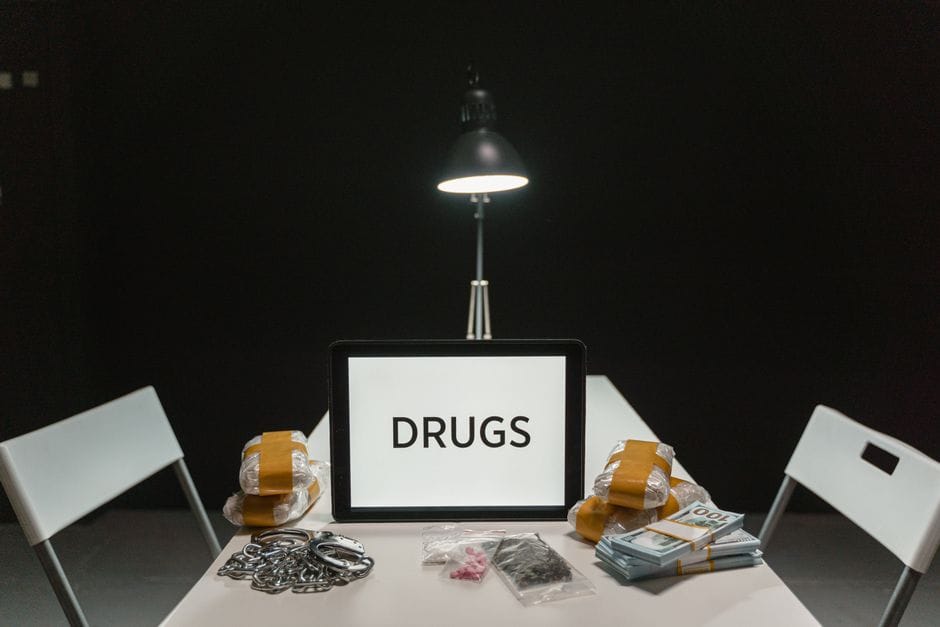
A man in Malta was recently arrested after being found in possession of 46 individually packaged sachets containing both cannabis and cocaine, according to reporting by the Times of Malta. While the case is straightforward from a criminal law perspective, it raises a broader and more nuanced question that regulators, harm reduction advocates, and policy observers in Malta have been grappling with since the passage of Malta's 2021 cannabis reform: what happens at the edges of a regulated system, where cannabis and harder unregulated substances continue to circulate together?
A Regulated Framework in an Unregulated Reality
Malta's 2021 cannabis reform — enacted under Chapter 628 of the Laws of Malta — created a framework for adult-use cannabis through nonprofit Cannabis Harm Reduction Associations (CHRAs), overseen by ARUC (Authority on the Responsible Use of Cannabis), Malta's dedicated regulator for adult cannabis use. The law decriminalised personal possession of small quantities and established a community-based distribution model intended to move cannabis consumers away from unregulated street markets.
The logic of the CHRA model is explicitly harm-reduction oriented: by providing adults with a legal, quality-controlled route to access cannabis, the framework aims to sever the social and commercial links between cannabis consumers and suppliers of harder, more dangerous substances. In theory, a person who joins a CHRA has no need to interact with a street market at all.
But cases like this one illustrate how porous that boundary remains in practice. The co-packaging of cannabis and cocaine in uniform sachets — a method associated with retail-level distribution — suggests that, for some operators, cannabis remains a product bundled within a broader unregulated market rather than a separate, regulated category.
What the Evidence Says About Polydrug Markets
The so-called gateway theory — the idea that cannabis use leads to consumption of harder substances — has been extensively studied and is widely regarded by researchers as an oversimplification. The more relevant and better-supported concept is that of market co-location: when cannabis is purchased through unregulated channels, consumers are more likely to be exposed to — and offered — other substances by the same suppliers. This is a supply-side phenomenon, not a pharmacological one.
A 2023 analysis published in the International Journal of Drug Policy examining cannabis regulation models in Europe found that jurisdictions which implemented robust legal access frameworks reported reductions in polydrug exposure among cannabis consumers over time, as market separation became more established. Malta's model, still relatively young, has not yet been subject to equivalent longitudinal study.
ARUC has not yet published comparative data on unregulated market activity before and after the 2021 reform — a gap that harm reduction advocates have noted publicly. Without baseline and follow-up data, it remains difficult to assess whether the CHRA framework is achieving its intended market-separation effect.
Enforcement, Regulation, and the Community Response
From an enforcement standpoint, possession of cocaine in any quantity remains a criminal offence in Malta, and the case will proceed accordingly. Cannabis found outside the CHRA framework — in quantities or contexts inconsistent with personal use — also remains subject to legal scrutiny under Chapter 628.
Within Malta's CHRA community, cases of this nature tend to reinforce the argument for strengthening — not retreating from — the regulated framework. Representatives from several CHRAs operating across the island have previously argued, in submissions to ARUC, that ongoing access gaps in the CHRA system push some adult consumers back toward unregulated suppliers. If legal access is unavailable, inconvenient, or insufficient in quantity, the street market remains a fallback.
ARUC has indicated it continues to monitor CHRA capacity and access across Malta, though no formal review timeline has been made public as of the time of writing.
The Broader European Picture
Malta is not alone in confronting the reality that cannabis regulation does not automatically or immediately eliminate unregulated supply. Germany's partial legalisation model, implemented in 2024 under the Cannabisgesetz, has faced similar criticism: early data from the European Union Drugs Agency (EUDA) suggests that illicit market activity has not disappeared, though consumer exposure to adulterants has decreased among those accessing regulated products. Spain's cannabis club model, operating in a legal grey zone for decades, has produced a similarly mixed picture.
The consistent finding across European contexts is that regulation tends to improve outcomes for those who engage with it — but that parallel unregulated markets persist until legal access becomes sufficiently widespread, affordable, and normalised to displace them entirely.
The 46-sachet seizure in Malta is, at its core, a criminal matter for the courts to resolve. But it also serves as a useful, if uncomfortable, reminder that a cannabis regulation framework is only as effective as its reach — and that harm reduction goals are not achieved by passing a law alone, but by building the infrastructure, access, and public trust to make regulated options the default.
Sources:
Times of Malta (publication name only — URL unavailable)
International Journal of Drug Policy, 2023 (cannabis regulation models in Europe)
European Union Drugs Agency (EUDA), early monitoring data on Germany's Cannabisgesetz, 2024
Chapter 628 of the Laws of Malta
Featured image: Photo by MART PRODUCTION on Pexels
Members Discussion