Industry & Intelligence
A Year of Suspended Sentences
At the start of 2026, the question hanging over Europe's two largest medical cannabis markets — Germany and Australia — was not whether regulatory tightening was coming, but how severe it would be. Nine months on, the answer is more ambiguous than most analysts predicted: the restrictions are largely still pending, but the industry is not celebrating. The costs are already being borne, almost exclusively by patients.
A mid-year update published by Business of Cannabis in September 2026 revisits the forecasts the outlet's analysts made in late 2025 — and finds that while the headline reforms have stalled, the landscape has shifted in quieter, more consequential ways.
Germany: The Sword That Has Not Dropped
Germany's medical cannabis market expanded rapidly on the back of telemedicine — a model that allows patients to obtain prescriptions remotely, connecting them with doctors willing to prescribe cannabis without requiring an in-person visit. By the end of 2025, according to the Business of Cannabis report, this ease of access had become politically contentious, with critics pointing to questionable marketing practices by some platforms and insufficient regulatory oversight.
The German Health Ministry responded in July 2025 with a draft bill that proposed banning mail-order dispensing and requiring a mandatory in-person consultation for first-time prescriptions. For exporters, distributors, and prescribers supplying the German market, the draft functioned as what the Business of Cannabis report describes as a “sword of Damocles” — a suspended threat capable of restructuring the entire supply chain at short notice.
That sword has not dropped. The bill cleared its first Bundestag reading in December 2025 with visible fractures already forming within the ruling coalition. A Health Committee hearing in January 2026, convening 22 expert witnesses, failed to resolve those tensions and instead reinforced the view that the bill, in its current form, was unworkable. As of the report's September 2026 publication date, the legislation remains in regulatory limbo, with analysts divided on whether a finalised version will be enforced at all this year.
But regulatory inaction has not meant no change. From 30 July 2026, cannabis flower was removed from eligibility for reimbursement under Germany's statutory health insurance system, known as the GKV. The Business of Cannabis report describes this as a move seen by some observers as a political concession to critics of medical cannabis — a way to demonstrate action while the broader legislative reform stagnates. Whatever the political intent, the practical impact falls on patients with the most serious conditions, who are most likely to rely on public insurance coverage to access treatment. Industry bodies and patient representatives are contesting the change, but it is now in effect.
Australia: A Parallel Story
The situation in Australia echoes Germany's in several respects. Telemedicine-driven growth in the country's medical cannabis market had, by mid-2025, prompted scrutiny from the Therapeutic Goods Administration (TGA), Australia's medicines regulator. The Health Practitioner Regulation Agency had taken action against 57 practitioners by mid-2025, with 60 more under investigation — following data showing that eight prescribers had together written more than 10,000 cannabis prescriptions within six months, with one practitioner alone responsible for over 17,000 scripts in that period.
Despite this, the TGA confirmed in August 2026 that substantive reform to the medical cannabis prescribing framework was unlikely before 2027, declining to commit to any concrete timeline. As in Germany, the threat of restriction has shaped market behaviour without the rules themselves yet arriving.
What This Means for European Exporters — and Malta's Position
For European producers and exporters — including those operating within Malta's regulatory environment — the German situation in particular warrants close attention. Germany remains the continent's largest medical cannabis market by volume, and any finalised restrictions on telemedicine prescribing or mail-order dispensing would directly affect the export pipelines that Maltese and other European-licensed producers have developed to supply it.
ARUC (Authority on the Responsible Use of Cannabis), Malta's regulator for adult-use cannabis under Malta's 2021 cannabis reform (Chapter 628 of the Laws of Malta), oversees the island's adult-use framework rather than its medical supply chain — but the broader regulatory climate in Germany shapes investment confidence and export strategy across the region. Medical cannabis operators licensed in Malta, who operate under a separate framework, will be monitoring the Bundestag's next moves with commercial stakes in the outcome.
The removal of GKV reimbursement for cannabis flower is also worth tracking as a policy precedent. If a major EU member state can quietly restrict patient access through insurance policy rather than primary legislation — without triggering the same level of industry or public pushback that a formal ban would generate — it establishes a template that other health ministries may observe with interest.
The Limits of the Telemedicine Model
The Business of Cannabis report frames the telemedicine story as one of growth that outpaced governance. Prohibition Partners lead analyst Alex Khourdaji had forecast in late 2025 that telemedicine restrictions in Germany were “bound to occur,” while cannabis market analyst Alfredo Pascual had warned of “a clear risk of regulatory tightening in medical cannabis, even if the exact timing and final shape of the rules remain uncertain.” Both assessments remain accurate — the tightening is not off the table, it is simply delayed.
The telemedicine model has delivered genuine benefits: it has removed geographic and mobility barriers for patients, particularly those in rural areas or with conditions that make travel difficult. The policy challenge is not the technology itself but the marketing and oversight failures that accompanied its rapid scaling. Those failures are being used to justify restrictions that, if poorly designed, risk reducing access for the most vulnerable patients rather than curbing the practices that prompted concern.
The fact that Germany's restrictive draft bill has effectively collapsed under its own contradictions is not an unambiguous victory for patients or industry — it simply means the uncertainty continues. For operators planning supply chains, staffing, and capital allocation around the German market, prolonged limbo carries its own cost. And for patients who lost GKV coverage on 30 July, the political deadlock offers little comfort.
The mid-2026 picture across global medical cannabis markets is one of reform promised and reform deferred — with the interim costs distributed unevenly, falling most heavily on the patients these frameworks were designed to serve.
Sources:
Business of Cannabis, What's in Store for the Global Cannabis Industry in 2026? Mid-Year Update (updated 2 September 2026): https://businessofcannabis.com/whats-in-store-for-the-global-cannabis-industry-in-2026/
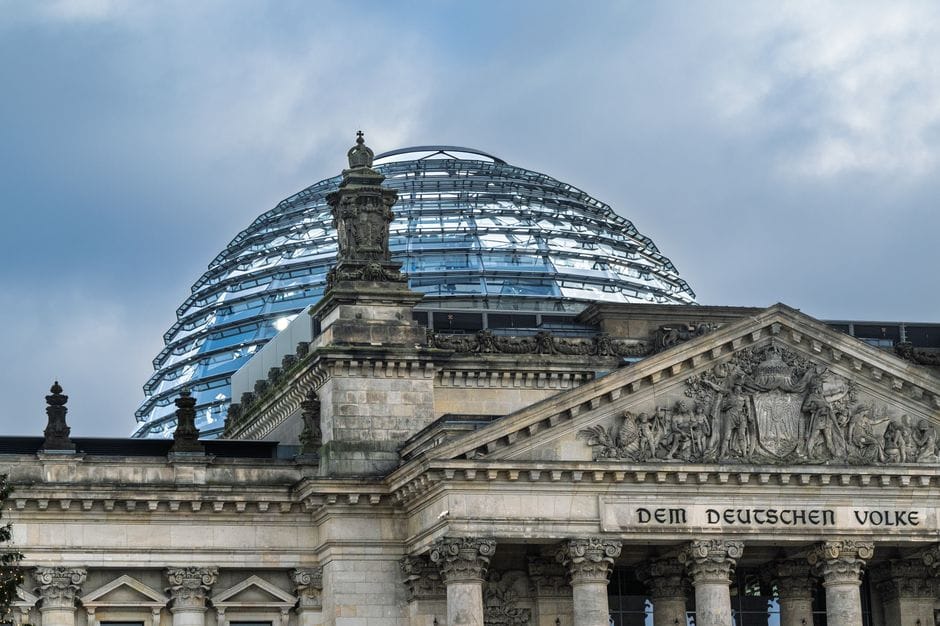
Featured image: Photo by Marcelo Gonzalez on Pexels
Members Discussion