
Culture & Community
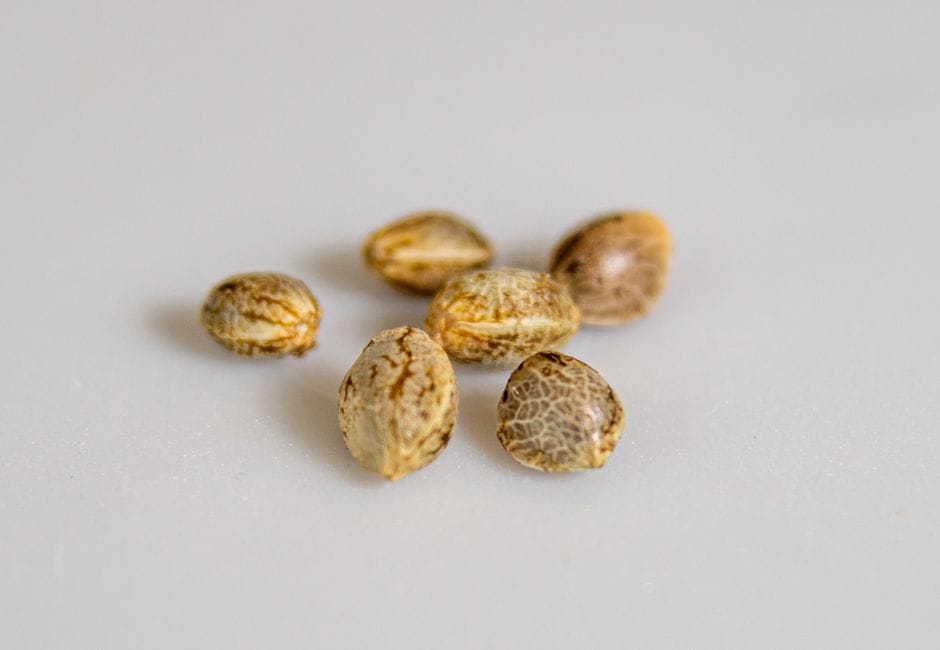
Walk into any Cannabis Harm Reduction Association (CHRA) gathering in Malta, browse a Dutch coffeeshop menu, or scroll through a Spanish cannabis social club catalogue, and you will encounter the same handful of names repeated with near-religious reverence: White Widow, OG Kush, Jack Herer, Gelato. These are not simply product labels. They are the landmarks of a breeding history that unfolded mostly underground, across decades, before legal frameworks like Malta's 2021 cannabis reform began bringing that culture into the open.
Understanding where these cultivars come from — and why they endure — is less a matter of consumer preference than it is of cultural literacy. The story of cannabis genetics is, in many ways, the story of cannabis itself: a global network of breeders, selectors, and enthusiasts passing knowledge sideways across borders, long before regulators or markets took notice.
The Foundations: Landrace Influence and Early Breeding
The earliest cultivars to achieve lasting influence were not accidents. Sacred Seeds, a California-based breeding collective active during the 1970s, produced what would become known as Skunk #1 — a deliberately stabilised cross of Afghan, Colombian, and Mexican genetics. It was among the first modern attempts to apply structured plant breeding principles to cannabis, producing consistent offspring across multiple generations. That stability made it invaluable as a building block, and its genetic fingerprint is detectable in a significant proportion of commercial cultivars sold in Europe today.
Northern Lights, an indica-dominant cultivar whose precise origins remain contested but whose influence is not, followed a similar trajectory. Its short flowering period, heavy resin production, and reliable yields made it the reference point for indoor cultivation — a category that was, at the time, growing rapidly in response to intensified law enforcement in outdoor-growing regions. Northern Lights genetics remain present in dozens of contemporary catalogue entries across European seed banks.
Haze represented the other pole entirely. Developed in California during the same era, it was a sprawling, slow-flowering sativa with a complex terpene profile and effects that were markedly more stimulating than the sedative indicas then circulating. Its impracticality for most growers — flowering periods exceeding sixteen weeks in some phenotypes — was offset by the fact that it produced something genuinely unlike anything before it. Nearly every sativa-leaning hybrid in today's European market carries some proportion of Haze ancestry.
The Dutch Chapter and the Coffeeshop Effect
The Netherlands provided the next major inflection point. Amsterdam's coffeeshop system, operating in a framework of tolerated sale since the late 1970s, created a commercial incentive for consistency and visual appeal that had not previously existed. White Widow, introduced by a Dutch seed company in the early 1990s, exemplified the result: a balanced indica-sativa hybrid that produced an almost unnaturally dense coating of trichomes, was relatively forgiving to cultivate, and performed reliably on the retail shelf. It became one of the most widely grown cultivars in Europe and remained so for well over a decade.
The High Times Cannabis Cup, held annually in Amsterdam, functioned during this period as a de facto international standard-setting body. Cultivars that won — or simply competed credibly — gained distribution across the global seed market. Super Silver Haze, produced by Green House Seeds from a cross of Skunk, Northern Lights, and Haze, won the cup for three consecutive years in the late 1990s. The prize was commercial legitimacy: seed banks across Spain, the UK, and beyond began stocking it immediately.
Character and Chemistry: When Terpenes Became the Story
A quieter revolution was running in parallel with the competition circuit. Breeders working outside the mainstream — often sharing cuts rather than selling seeds — were selecting for aroma profiles rather than yield or visual appeal alone. DJ Short's Blueberry, developed during the 1970s and disseminated slowly over the following decades, demonstrated that cannabis could express genuinely fruit-forward aromas through careful phenotype selection under cold conditions. It seeded, almost literally, an entire lineage of fruit-terpene cultivars that now dominate large portions of the European and Mediterranean market.
Cheese, which emerged as a selected phenotype of Skunk #1 in the United Kingdom, illustrated a different principle: that a sufficiently distinctive aroma could define an entire cultivar family. Its sharp, fermented scent was polarising but memorable, and it generated a lineage of derivatives — Blue Cheese, Exodus Cheese, and others — that persist in catalogues to this day. In Malta, where CHRA-distributed cannabis now carries mandatory product information including cultivar name and cannabinoid content, consumers and association members increasingly discuss cultivar profiles with a specificity that would have been unusual even five years ago.
The American West Coast Turn
OG Kush arrived without a clean origin story — its provenance is still debated among breeders — but its influence is beyond dispute. The combination of high THC content with a layered aromatic profile of earth, citrus, and fuel made it immediately distinctive, and its offspring are staggering in number. Girl Scout Cookies, itself a cross of OG Kush and Durban Poison, generated a further wave of hybrids — Gelato, Runtz, and their many derivatives — that have come to define the contemporary premium cannabis aesthetic: sweet, complex, potent, and visually striking.
Gorilla Glue #4, also marketed as Original Glue following a trademark dispute, became notorious for a single characteristic: resin production so abundant that harvesting scissors became coated and effectively unusable without repeated cleaning. The name was a cultivar communicating its own chemistry. It has since been used as a parent in numerous European-bred crosses.
What the Names Mean Now
For cannabis consumers engaging with regulated frameworks — whether in Malta's CHRA model, Spain's cannabis social clubs, or the medical programmes operating across Germany, Italy, and Portugal — cultivar names have acquired a new function. They are no longer just informal shorthand passed between growers. They appear on product labels, in ARUC (Authority on the Responsible Use of Cannabis) compliance documentation, and in the conversations between association members trying to understand what they are consuming and why.
The history encoded in a name like Jack Herer — itself a tribute to the American cannabis activist and author of The Emperor Wears No Clothes, and created by Sensi Seeds as a deliberate homage — carries meaning that extends well beyond the plant's terpene profile. It is a reminder that cannabis culture has a documented, traceable lineage, built by people who worked carefully and often at considerable legal risk to preserve and improve something they believed in.
That lineage now sits, somewhat improbably, inside a regulated European framework. The genetics did not change. The context around them did.
Featured image: Photo by Derrick Brown on Pexels
Members Discussion