Culture & Community
The letter arrived before anyone thought to ask what kind of cannabis it was. An officer in Italy's Guardia di Finanza — the financial police corps responsible for customs, tax fraud, and border enforcement — tested positive for THC during a routine workplace screening. His employer moved quickly. He was dismissed. The case looked straightforward, until it wasn't.
The officer had not consumed illegal cannabis. He had been using cannabis light — Italy's term for low-THC hemp products, sold legally across the country since a 2016 law opened the market for hemp with THC content below 0.2 percent. His legal challenge eventually landed before the TAR, Italy's administrative court system, which ruled in his favour and blocked the dismissal. The decision has since circulated widely in Italian legal and cannabis policy circles, and for good reason: it exposes a gap that exists in most European workplace drug-testing frameworks.
What the Test Measured — and What It Missed
Standard urine-based THC testing does not distinguish between cannabis consumed recreationally and hemp products consumed legally. Both leave detectable THC metabolites. The metabolite most commonly screened for — THC-COOH — is the same regardless of source. A person who drinks a hemp-infused tea each morning and a person who consumed high-THC cannabis the night before can produce similar results on the same immunoassay panel, particularly at lower threshold concentrations.
This is not a fringe scientific concern. It is a documented limitation acknowledged in occupational toxicology literature. Yet most European workplace drug policies were drafted before legal hemp products became mainstream consumer goods, and many have not been updated to account for the changed commercial reality. Italy now has thousands of cannabis light shops. Germany has partially liberalised adult-use cannabis. Malta has its own regulated framework under Chapter 628 of the Laws of Malta, which permits adult consumers to obtain cannabis through licensed Cannabis Harm Reduction Associations (CHRAs) — membership-based, non-profit clubs regulated by ARUC (Authority on the Responsible Use of Cannabis), Malta's regulator for adult cannabis use.
The Maltese Dimension
Malta's situation differs from Italy's in one important structural way: adult-use cannabis in Malta is accessed through CHRAs rather than retail shops, and the framework explicitly targets harm reduction for adults. But the underlying tension — between legal cannabis consumption and workplace drug-testing policy — is identical. A Maltese adult who is a registered CHRA member, consumes cannabis lawfully within the limits set by our guide to Malta cannabis law, and then faces a workplace screening operates in exactly the same legal grey zone as the Italian finance officer did.
Maltese employment law does not currently include specific provisions for cannabis consumers employed in sensitive roles, and ARUC has not yet issued guidance on the intersection between adult-use rights and occupational screening. The Italian ruling does not bind Maltese courts. But it adds weight to an argument that advocates have been making quietly for some time: that drug-testing protocols written before regulated adult-use cannabis existed need revision, not because cannabis should be invisible to employers, but because the tests themselves are blunt instruments that cannot reliably measure impairment.
The Deeper Problem With Impairment Testing
THC metabolites can persist in urine for anywhere from three days to several weeks depending on frequency of use, body composition, and testing sensitivity thresholds. Unlike alcohol, where a breath test gives a reasonable real-time approximation of intoxication, a positive urine THC screen tells you almost nothing about whether someone was impaired at work. It tells you they consumed cannabis sometime in the recent past — which, in Malta, Germany, and several other European jurisdictions, is now a legal activity.
Employers in safety-critical industries — aviation, heavy machinery, law enforcement — have legitimate interests in a sober workforce. No reasonable harm-reduction advocate disputes that. The question is whether crude metabolite screening is fit for purpose in a regulatory environment where cannabis consumption is legal for millions of adults. The Italian TAR's decision suggests, at minimum, that courts are beginning to ask that question too.
What Comes Next
The Italian ruling is administrative rather than constitutional, and its precise scope is not yet clear from available reporting. It does not establish that cannabis consumers in sensitive roles are immune from discipline. What it does establish, at least provisionally, is that a positive test result alone — without confirmation of the product's origin or evidence of impairment — may not be sufficient grounds for dismissal when legal hemp products are a plausible explanation.
For employers, HR professionals, and policymakers across the Mediterranean, that is a signal worth taking seriously. Workplace drug policies are due for a review that most institutions have not yet scheduled.
The finance officer got his job back. The harder question — how European employment frameworks catch up with European cannabis law — is still very much open.
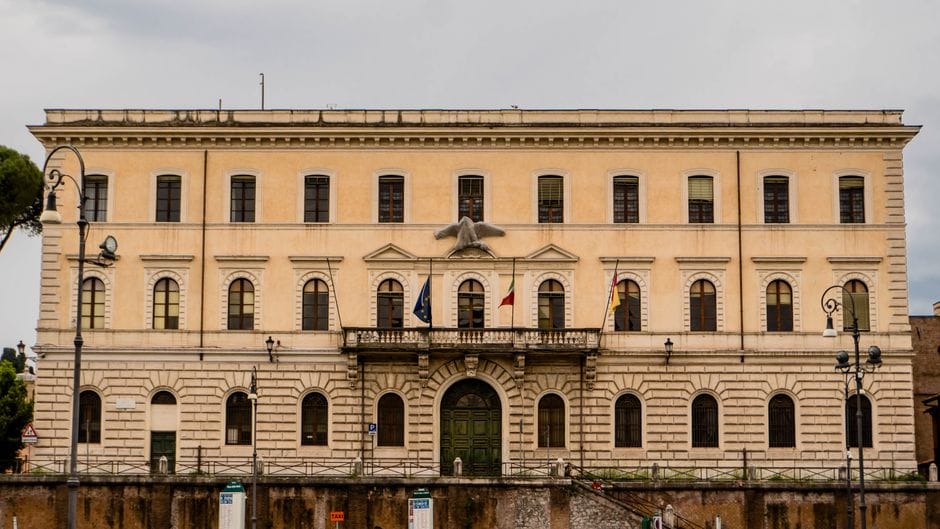
Featured image: Photo by Alejandro Aznar on Pexels
Members Discussion