
Culture & Community
For years, a tidy idea circulated among cannabis consumers, budtenders, and even some clinicians: add CBD to your THC and you blunt the edge. Too intense? Reach for the high-CBD flower. The logic felt intuitive. It became, informally, received wisdom.
A new meta-analysis from a Canadian research team, published in late 2025, does not exactly demolish that idea. But it complicates it significantly — and in ways that matter both for how people choose their cannabis and how researchers should be designing future studies.
What the researchers actually asked
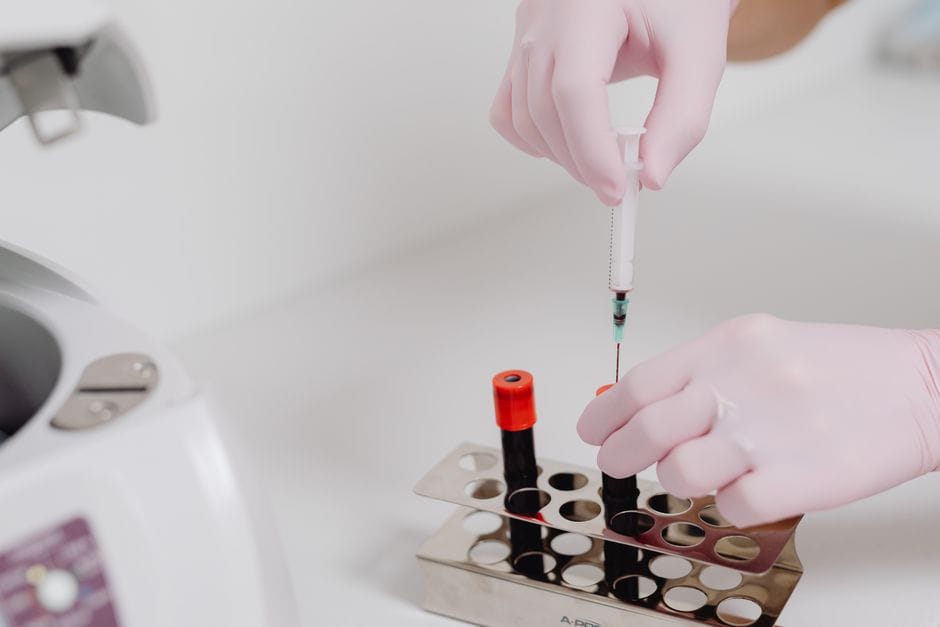
The team set out to answer a specific, testable question: when a person consumes CBD at the same time as THC, what happens to the levels of those compounds in the bloodstream? Not how do they feel — what does the blood actually show?
To find out, they conducted a systematic review following PRISMA guidelines (a standard methodology checklist for systematic reviews), searching available literature through November 2025. They identified 14 human studies involving 341 participants in total. Seven of those studies used oral administration, five used inhalation, one used intravenous delivery, and one combined intravenous and oral routes. Twelve were crossover trials — meaning the same participants received THC alone in one session and THC combined with CBD in another — and two used parallel groups.
The crossover design matters. It reduces the influence of individual variation, which is one of the most persistent headaches in cannabis pharmacology research.
More THC in the blood, not less
When the researchers combined the results across studies, they found that total THC exposure in blood was significantly higher when CBD was present alongside THC than when THC was administered alone. The effect size was 0.526 — a moderate figure in statistical terms. There is an important caveat, however: the authors rated the certainty of this evidence as very low. The result is statistically significant, but the exact magnitude of the effect remains uncertain. Fourteen studies and 341 participants is a meaningful starting point, not a definitive answer.
Still, the direction of the finding runs counter to the buffer theory. CBD did not appear to reduce how much THC reached the bloodstream. If anything, co-administration was associated with more THC circulating, not less.
The metabolite finding is harder to dismiss
The more consistent result — and the one that arguably deserves more attention — concerns 11-hydroxy-THC, or 11-OH-THC. When the body metabolises THC, it produces several breakdown products. 11-OH-THC is one of them, and unlike many metabolites, it is pharmacologically active. It binds to cannabinoid receptors and may contribute meaningfully to the overall effect of cannabis consumption, particularly with oral and edible products where this metabolite is produced in larger quantities.
When CBD was co-administered with THC, both the peak blood concentration of 11-OH-THC and total cumulative exposure to it increased. The effect size for peak concentration was 0.428; for total exposure, it was 0.692. The researchers rated the certainty of this evidence as moderate — a notably stronger rating than the THC result itself.
Translated out of pharmacokinetic language: with CBD present, more of this active metabolite was circulating, and for longer.
Dose and route: two variables that change the picture
The team went further and asked whether the amount of CBD administered affected the interaction. For 11-OH-THC, the answer was yes. A dose-response relationship appeared — higher CBD doses were associated with greater increases in 11-OH-THC levels. This relationship did not appear for THC itself, which adds a layer of nuance: CBD's interaction with the system is not uniform across all the compounds involved.
Administration route also appeared to matter. Oral CBD seemed to produce larger increases in 11-OH-THC than inhaled CBD. This is not a trivial point. A consumer comparing a CBD-rich capsule or oil with a CBD-dominant inhalable product cannot assume the two are interchangeable simply because the cannabinoid ratios on the label look similar. How cannabinoids enter and move through the body shapes everything about what they do there.
What the study does not — and cannot — tell us
This is where careful reading becomes essential. The meta-analysis measured pharmacokinetics: how compounds move through the body. It did not measure pharmacodynamics: what effects those compounds actually produce. Higher blood levels of THC or 11-OH-THC do not automatically translate into a more intense subjective experience, greater impairment, or increased risk. The relationship between blood concentration and perceived effect is itself poorly understood and highly individual.
So the finding is not: “CBD makes you more intoxicated.” The finding is: “CBD appears to increase how much THC and its active metabolite appear in the bloodstream, and we are not yet sure what that means experientially.”
That distinction matters enormously for how this research gets communicated — and how consumers interpret it.
For the growing number of adult cannabis consumers in Malta and across Europe who deliberately choose high-CBD products or balanced THC:CBD ratios precisely because they want a more manageable experience, this study is not a reason to panic. It is a reason to stay curious, and to recognise that the science of cannabinoid interaction is far more layered than any simple ratio on a label can capture.
The buffer theory was never based on robust clinical evidence. It was a plausible hypothesis that became a cultural shorthand. What this meta-analysis suggests is that the truth is more interesting — and considerably more worth investigating properly.
The next question researchers need to answer is not just what CBD does to THC in the bloodstream, but what that actually means for the person consuming it. Until that answer exists, the most honest thing anyone can say is: the ratio matters, the route matters, the dose matters, and we have only just begun to understand how.
Featured image: Photo by https://kaboompics.com/ on Pexels
Members Discussion