
Culture & Community
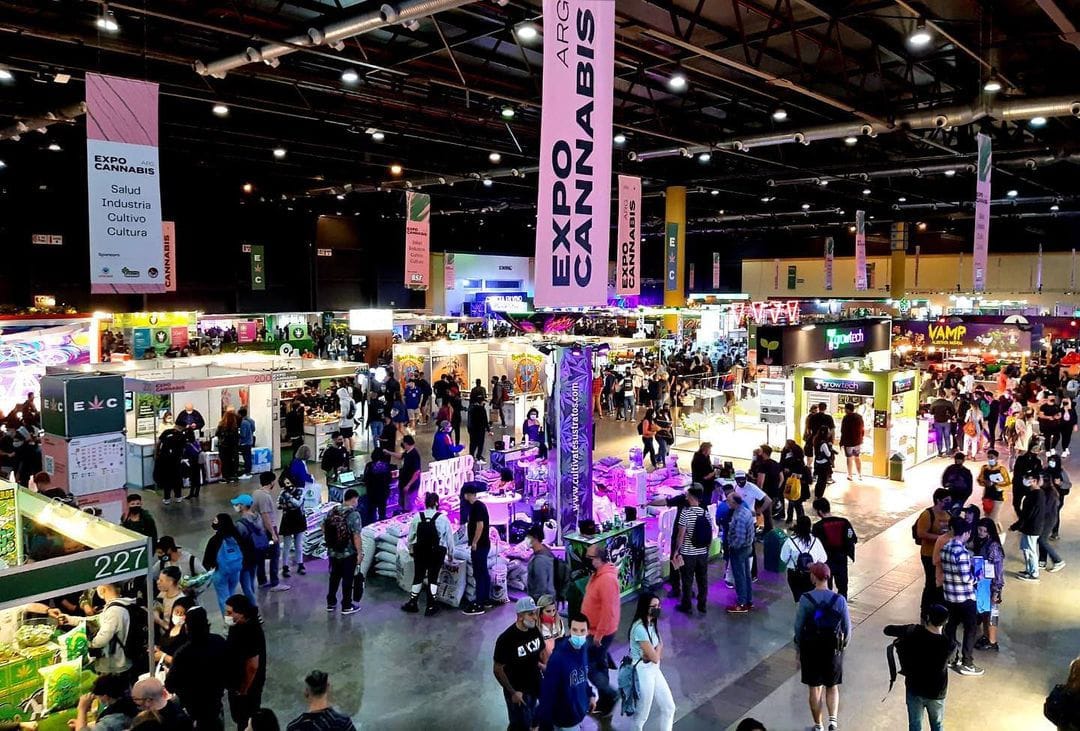
Fifty-three years is a long time to carry a memory. Carlos, a pharmacist from Venezuela visiting Buenos Aires, was a pharmacy student in 1973 when a lecturer handed cannabis around the classroom — an unremarkable gesture in the context of the era, quickly buried by decades of prohibition that followed. Then, in 2026, he walked the floor of Expo Cannabis Argentina and found himself genuinely surprised. Not by the products or the booths, but by the crowd: families with children, older adults, researchers, growers, and first-timers, all moving through the same space with what he and his friend Saskia described as a striking naturalness.
Saskia had attended the Buenos Aires expo two years earlier and returned this time with Carlos in tow. According to reporting by Revista THC, which covered the event, both are in their sixties. Both were drawn not by novelty but by curiosity — the kind that does not expire.
A Community That Built Itself
Expo Cannabis is not just a trade fair. It is, by most accounts from those who attend it, an annual reckoning with how far a movement has come. During the event's opening, Sebastián Basalo — director of Revista THC and part of the expo's organising team — traced the arc from persecution to policy. His framing was blunt: more than 15,000 growers and consumers were being arrested each year in Argentina simply for doing what they needed or wanted to do. Eight years ago, he said, this same community began gathering in this same space and started publicly demanding a place at the table.
What followed was a cascade of incremental wins. The REPROCANN programme enabled personal cultivation. A seed registry followed. Then came licences that allowed growers who had previously faced prosecution to formally register their own varieties — a step Basalo described as a form of historical reparation. A medicinal and industrial cannabis law was enacted. A dedicated regulatory agency was established. For a time, Argentina appeared to be building one of the more distinctive cannabis regulatory frameworks in the world.
When Momentum Stalls
That momentum, however, has not held. Basalo was candid about this: for several years now, he said, the state has stepped back. The regulatory agency currently has no permanent leadership. Coordination problems persist between the relevant bodies overseeing production and the registration of new plant varieties. Investors who entered the market on the strength of early policy signals have found themselves stranded. Basalo described it with the kind of image that needs no embellishment — people who had modest savings, watched an industry grow, got excited, and then ran into a reality that did not match the promise.
Marcos Duhalde of the company Revegetar echoed the same tension, noting the difficulty of sustaining a commercial operation in Argentina's current economic climate while also trying to be part of something that genuinely matters to you.
What First-Timers See
Against that backdrop of policy frustration, the human texture of the event stands out. Cristian, 24, travelled from the city of Córdoba to attend his first Expo Cannabis. He came for the genetics — new varieties he had not encountered before — and left with something harder to categorise. He told Revista THC about the ease of conversation on the floor: how you walk alongside a stranger, cross their path again twenty minutes later, exchange a half-apologetic look, and end up in a proper conversation. That, he suggested, is what a community actually feels like from the inside.
He also noticed the generational breadth of the crowd and welcomed it — the presence of older attendees who had chosen curiosity over received opinion. His invitation to anyone who had never engaged with cannabis culture was disarmingly simple: come and see. The environment, he said, is a good one.
A Reflection Worth Having Elsewhere
For readers in Malta — where Cannabis Harm Reduction Associations (CHRAs, the licensed member clubs that form the backbone of Malta's adult-use framework under Chapter 628 of the Laws of Malta) are still finding their feet, and where ARUC (Authority on the Responsible Use of Cannabis) continues to develop its regulatory posture — the Buenos Aires story offers a useful mirror. The specific legal architecture is different. The cultural and political histories are very different. But the underlying dynamic has a recognisable shape: a community that organised before the law caught up, that won incremental victories, that now has to navigate the gap between what was promised and what the state is actually prepared to sustain.
Malta's CHRAs are not facing the scale of economic disruption that Argentine licence holders describe. But the question of whether regulatory momentum holds — whether the institutions backing the framework remain adequately resourced and consistent — is not unique to South America. It is the question every emerging cannabis jurisdiction eventually has to answer, usually after the early enthusiasm has passed and the harder administrative work begins.
For a more detailed look at how Malta's own framework has evolved since 2021, our full Malta cannabis policy timeline traces the legislative and regulatory steps from decriminalisation to the current CHRA system.
Carlos, the Venezuelan pharmacist, spent an afternoon at Expo Cannabis between conference sessions and left planning to return. More than five decades after that pharmacy classroom in 1973, the subject had found a room large enough to hold it. Whether the institutions around it prove durable enough to match the community's energy is, in Argentina as elsewhere, still an open question.
Sources:
Revista THC — "Expo Cannabis 2026: una comunidad que crece, resiste y vuelve a encontrarse"
https://revistathc.com/expo-cannabis-2026-una-comunidad-que-crece-resiste-y-vuelve-a-encontrarse/
Featured image: Photo by Wang Shui on Pexels
Members Discussion