Industry & Intelligence
On the morning of 8 October 2026, Femke Starrenburg, head of corporate and marketing at Bedrocan, sent a message to journalists. The Dutch Ministry of Health, she explained, had refused to commit to taking delivery of medicinal cannabis batches that had already been produced. No agreement, no financing. No financing, no survival. The previous day, a court in the northern Netherlands had declared both of Bedrocan's Dutch entities — Bedrocan Nederland B.V. and Bedrocan International B.V. — bankrupt. Europe's longest-standing medicinal cannabis producer was gone.
The collapse, confirmed by Rechtbank Noord-Nederland on 7 October 2026, came less than two weeks after the company had been granted court-supervised suspension of payments — a last-ditch restructuring mechanism under Dutch insolvency law. That window closed without a deal. Court-appointed curators Arnold Gras and F.C. Verduijn now control the company's assets, including stockpiles of finished medicinal cannabis product that, under insolvency rules, they cannot simply release into the supply chain.
Medicine Sitting in a Warehouse
The immediate human cost is stark. Matt Hughes of the Medcan Family Foundation, a UK organisation supporting families of children prescribed cannabis-based medicinal products, described the bankruptcy as creating "an immediate risk to life for children and young people who rely on Bedrolite to control devastating, drug-resistant seizures." Bedrolite is a high-CBD, low-THC medicinal cannabis variety produced by Bedrocan, used in paediatric epilepsy cases where conventional anti-epileptic drugs have failed.
"These are children for whom every other medication has failed," Hughes told Business of Cannabis. "Children who, without this treatment, would now be in palliative care or no longer with us at all. If access is withdrawn, that is the future they and their families face."
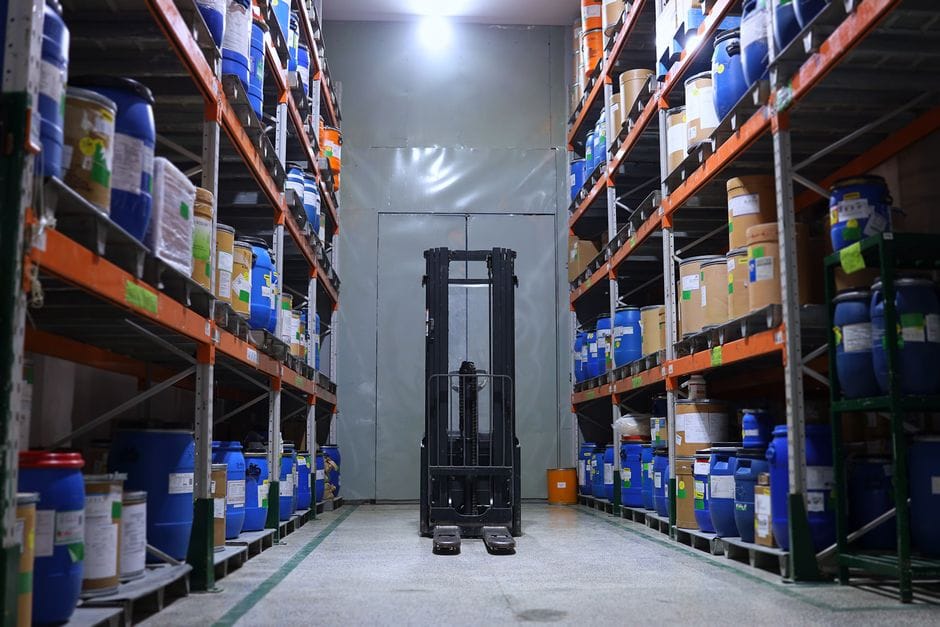
The medicine exists. It was grown, processed, and quality-controlled. It sits in storage while administrators, creditors, and government ministries navigate insolvency procedure. For the families Hughes represents, that procedural delay is not an abstraction.
A Danish Arm Also Under Pressure
Six days before the Dutch filing, on 1 October 2026, Bedrocan's Danish production subsidiary — Bedrocan Danmark ApS — separately entered formal restructuring proceedings at the Bankruptcy Court in Roskilde. Attorney Per Astrup Madsen of DLA Piper was appointed as rekonstruktør, the Danish equivalent of a court-supervised restructuring administrator, with a draft plan due to creditors on 15 October and a creditors' meeting set for 22 October.
Court documents reviewed by Business of Cannabis identify two secured creditors: Sydbank, with exposure of DKK 13.5 million, and EIFO, the Danish state's export and investment fund, with DKK 28 million at risk. Annual accounts for the year to April 2026, signed off by KPMG P/S, show the Danish entity's profit collapsed 92% — from DKK 10.2 million in 2024 to DKK 777,000 — while its cash on hand stood at just DKK 4,052. The accounts carried a qualified audit opinion, citing an unresolvable DKK 39 million intercompany receivable owed by the Dutch parent. The entity employed 23 full-time staff, up from 10 the previous year, and carried roughly DKK 80 million in operating lease commitments.
The preferred exit route, according to the administrator's note, is an "elevator model": existing equity wiped out, fresh capital brought in by a new owner. Whether a buyer materialises remains unclear.
A Policy Failure, Not Just a Business One
What makes the Bedrocan collapse notable — and uncomfortable for European health ministries — is the role that government purchasing decisions appear to have played in it. Bedrocan's Dutch operations ran on a state contract. When the Dutch Ministry of Health (VWS) wound that contract down and declined to agree new commercial terms, including refusing to commit to accepting batches already produced, the financial floor disappeared. Starrenburg's post-bankruptcy statement describes administrators working "extensively" to find a solution, but the ministry would not move.
Thomas Skovlund Schnegelsberg, chief executive of fellow Scandinavian medical cannabis producer Stenocare, told Business of Cannabis the collapse appeared to him to have been avoidable. His company operates in an adjacent market and watches Bedrocan's fate with clear professional interest — and, one suspects, a degree of alarm about what it signals for state-backed medical cannabis supply arrangements across Europe.
The deeper issue here is a structural one that extends well beyond the Netherlands. Across Europe, medicinal cannabis supply depends on a small number of licensed producers operating under state-adjacent frameworks — GMP-certified facilities, government procurement contracts, pharmacy distribution. When one of those producers runs into financial difficulty, there is no obvious redundancy in the system. Patients cannot simply switch brands at a pharmacy counter; formulations, cannabinoid profiles, and prescribing relationships are not interchangeable overnight.
What This Means for Malta and the Mediterranean
Malta's medical cannabis framework — separate from its adult-use system governed by ARUC (Authority on the Responsible Use of Cannabis) — relies on imported, pharmaceutical-grade product flowing through European supply chains. Bedrocan, while not the sole supplier in Maltese pharmacies, has historically been among the GMP-certified producers whose products circulate through European medical cannabis markets. Supply chain disruption at this level has a way of propagating downstream, tightening availability for patients who may already face prescribing and access hurdles.
For those tracking Malta's adult-use and medical cannabis frameworks, the Bedrocan case is a reminder that the supply infrastructure underpinning medical access is more fragile than it appears. Malta does not produce pharmaceutical-grade medicinal cannabis domestically. That dependency on European import chains is not unique to Malta — it is the condition of most smaller EU member states — but it makes events like this one worth watching closely.
The Systemic Question
Bedrocan's bankruptcy is being described in patient advocacy circles as an "unacceptable failure of duty of care." That framing is pointed. It suggests not corporate mismanagement but a failure by a state — as anchor customer, as regulator, as the entity that defined the market conditions in which Bedrocan operated — to honour an implicit obligation to the patients its procurement decisions served.
Europe's medical cannabis market has grown substantially in the past five years, but it remains structurally thin: a small number of producers, concentrated purchasing, and patients with few or no therapeutic alternatives. Bedrocan's collapse does not change that structure. It simply makes it visible.
The medicine is still in storage. The question of who bears responsibility for getting it to the children who need it — the administrators, the ministry, the creditors — has no clean answer yet. In the meantime, families wait.
Featured image: Photo by Elements Interactive on Pexels
Members Discussion