Industry & Intelligence
Three moves in seven days. By the second week of October, Aurora Cannabis — the Canadian producer that has quietly become one of the most consequential players in European medical cannabis — found itself at the centre of a corporate drama that would be unusual in any industry, let alone one still figuring out its own rules.
Curaleaf Holdings, which describes itself as the world's largest cannabis company by revenue at approximately US$2.6 billion, raised its hostile takeover bid for Aurora by 25%, to an implied US$5.00 per Aurora share. According to an October 5 filing with the SEC (Securities and Exchange Commission), each Aurora share would now receive 0.4013 Curaleaf subordinate voting shares plus US$1.00 in cash, up from the previous offer of 0.3463 shares and US$0.75. Curaleaf also raised the maximum it is prepared to pay to US$6.00 per share, and extended the shareholder acceptance deadline by three days.
The revised figure represents an 86% premium to Aurora's unaffected 30-day volume-weighted average price of US$2.75 as of August 10 — the month before news of the bid first moved the stock. The combined entity, Curaleaf argued, would operate across 17 countries with trailing revenue of more than US$1.5 billion, underlying operating profit of around US$350 million, and projected annual cost savings of at least US$40 million.
A Second Suitor Enters
Then came the complication. Reporting by Cultivated Daily broke the news that Organigram Global — a Canadian cannabis company in which British American Tobacco (BAT) holds a roughly 45% stake — had been in merger discussions with Aurora for several weeks. Neither Aurora nor Organigram has publicly confirmed the talks. But Curaleaf's public response left little doubt it believes they are real.
In a statement carried by MMJDaily on October 12, Curaleaf said it was "outraged, and Aurora shareholders should be too," and questioned why what it called "a small Canadian company" had been granted access to Aurora's process while Curaleaf itself was "being denied customary due diligence access." The language was pointed. Aurora's board had, as of early September, recommended shareholders take no action on the Curaleaf bid while its Special Committee of independent directors — working with advisers Fort Capital, Torys LLP, and Kingsdale — reviewed the offer.
Aurora's CEO Miguel Martin responded to the revised bid in measured terms, saying it was "simply the next step in the process, not a deadline to make a decision." The board's stance, as of the time of writing, remains unchanged.
The Organigram angle deserves scrutiny. On its own, Organigram carries a market capitalisation of roughly US$200 million — a fraction of Curaleaf's scale. But BAT, worth more than US$100 billion, sits behind it. Any Organigram-led proposal would still need to be structured, approved, and funded in a form that satisfies both regulators and Aurora's shareholder base. That is not a trivial hurdle. What BAT's involvement signals, however, is that tobacco capital continues to view the European cannabis market as a strategic long-term bet — not a speculative trade.
Germany Is the Prize
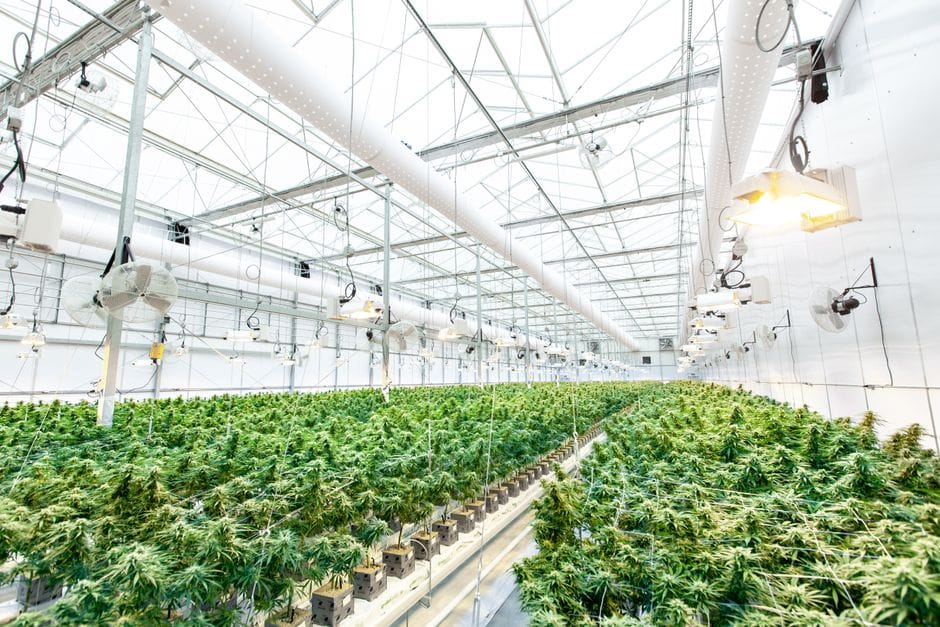
What grounds this corporate manoeuvring in something concrete is Aurora's parallel announcement, on October 8, of the completion of its facility expansion at Leuna, in the German federal state of Saxony-Anhalt. Now rebranded as Aurora Horizon, the site received a widened EU-GMP (Good Manufacturing Practice) licence from the state's Office for Social Affairs, Youth and Health. Aurora stated that expected annual flower output at the facility has "more than doubled," though the company did not provide baseline or target figures in kilograms. Aurora describes itself as one of only three licensed in-country producers in Germany.
This is the heart of the matter. Germany's cannabis regulation shift — which opened a significant medical and, more recently, adult-use adjacent market — has made EU-GMP certified, in-country production capacity genuinely scarce and genuinely valuable. Curaleaf's stated rationale for pursuing Aurora has always centred on Aurora's European footprint. A doubled production capacity at Leuna, announced in the same week as a raised hostile bid, is either very good timing or a very deliberate negotiating signal.
What This Means for the European Market
For observers of the European cannabis supply landscape — including those watching how regulated markets in Malta and elsewhere source their product — the Aurora saga is a useful case study in where the real competition is taking place. The regulatory frameworks in Germany, the Czech Republic, and increasingly across southern Europe are creating demand for compliant, traceable, EU-GMP certified flower. Whoever controls that production capacity will hold significant leverage as those markets mature.
In Malta, where adult-use cannabis operates under a distinct consumer framework centred on Cannabis Harm Reduction Associations (CHRAs) — member-based, non-profit clubs licensed by ARUC (Authority on the Responsible Use of Cannabis) — the supply chain question is somewhat separate from the medical market. But the broader dynamic is the same: regulated cannabis in Europe is moving toward consolidation, and the companies that control certified production close to the point of sale will shape what becomes available, at what price, and under what conditions.
The combined entity Curaleaf envisions — 17 countries, US$3 billion in market value — would be something European cannabis has not yet seen: a genuinely continental-scale operator. Whether that benefits consumers, patients, and smaller market participants, or simply concentrates power in fewer hands, is a question regulators across the continent will eventually have to answer.
For now, the outcome remains open. Aurora's board is reviewing a second potential deal while publicly holding Curaleaf at arm's length. Curaleaf is lobbying shareholders directly. BAT is watching from behind Organigram's curtain. And in Saxony-Anhalt, a newly expanded greenhouse is producing flowers that everyone, it seems, wants to own.
The board that says it is in no rush may find that the market disagrees.
Sources:
Business of Cannabis — https://businessofcannabis.com/the-aurora-menage-a-trois-three-shifts-in-seven-days/
Featured image: Photo by Richard T on Pexels
Members Discussion