
Industry & Intelligence
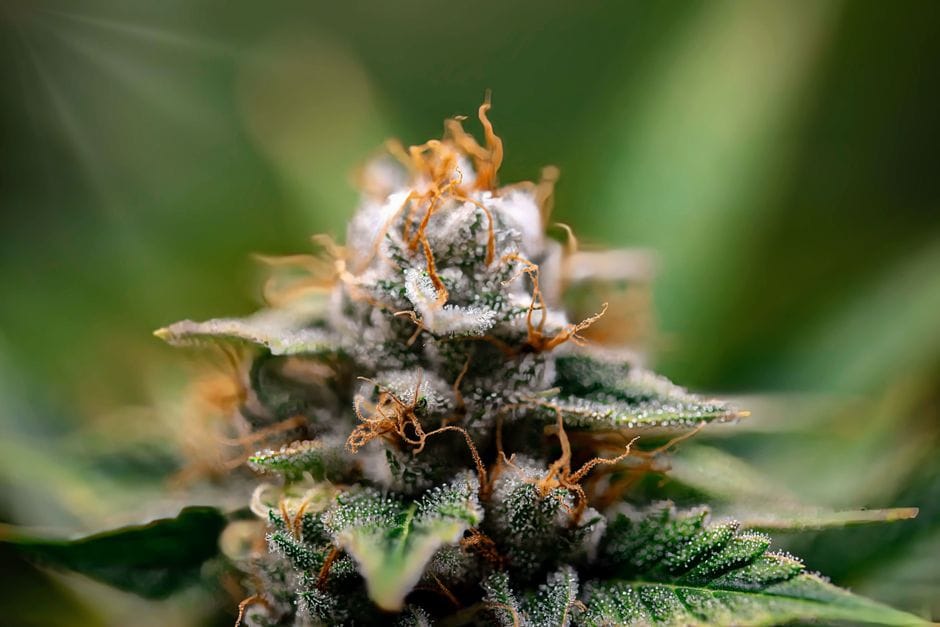
Walk into any medical cannabis clinic in Europe today and the conversation will almost certainly revolve around two molecules: THC (tetrahydrocannabinol) and CBD (cannabidiol). They are the best-understood cannabinoids, the most consistently produced, and the ones around which an entire prescribing culture has been built. But according to a growing number of researchers and producers, this narrow focus may be leaving the bulk of cannabis's pharmaceutical value untouched.
A Plant Reduced to Two Compounds
Cannabis flower is not a two-molecule medicine. It is a complex botanical material containing more than 100 identified cannabinoids, alongside terpenes and flavonoids — many of which have been known to science for decades. Yet the clinical and commercial infrastructure that has grown up around medical cannabis in Europe has, largely by necessity, focused on what could be reliably characterised, produced, and prescribed. That is THC and CBD.
Writing for Business of Cannabis, James Duckenfield, CEO of UK-based cultivator Glass Pharms, argues that today's medical cannabis formulary reflects the limits of the current supply chain rather than the limits of the plant. “It is dictated by what the supply chain has so far been able to deliver, and what the emerging research can so far prove,” Duckenfield writes — a distinction that has significant implications for how Europe thinks about cannabis-based medicine going forward.
The Endocannabinoid Gap
Part of the problem is educational. The endocannabinoid system — the network of receptors, endogenous ligands, and regulatory enzymes that cannabinoids interact with — was only characterised in meaningful detail from the late 1980s onward. The CB1 receptor was first identified in 1988 and cloned in 1990. Anandamide, CB2, and 2-AG (2-arachidonoylglycerol) followed over the next decade. Yet despite nearly four decades of accumulating science, Duckenfield notes that only one UK university currently includes the endocannabinoid system in its medical syllabus.
The European picture is not dramatically different. Medical cannabis returned to legal prescribing in the UK in 2018, and comparable frameworks have since opened across Germany, the Netherlands, and other EU member states. But the clinical education gap that accumulated during decades of prohibition has not closed at anything like the same pace as the regulatory frameworks that were meant to replace it.
CBG and THCV: Supply Is the Bottleneck
Cannabigerol (CBG) and tetrahydrocannabivarin (THCV) represent two of the more clinically interesting minor cannabinoids currently attracting research attention. Neither is a newly discovered compound — both have been known to science for decades — but neither has entered routine prescribing in Europe's medical cannabis markets, primarily because producing plants that express minor cannabinoids reliably, at commercial scale, and batch after batch, is technically demanding work.
Glass Pharms reports that its CBG-rich cultivar has been available to eligible patients in the UK for more than two years, with a THCV-rich medical cannabis flower described as near release. The significance here is not the individual compounds so much as the model: that purpose-bred cultivars, designed to express specific minor cannabinoids consistently, are a prerequisite for clinical uptake. Prescribers cannot build treatment protocols around molecules they cannot reliably source.
Dosing, Confidence, and the Flower Problem
There is also a fundamental pharmacological challenge specific to flower as a delivery format. Duckenfield identifies the current UK permitted tolerance on cannabis flower — within 10% of the label claim — as a meaningful clinical obstacle. That tolerance represents a swing of roughly 20% either side of the intended dose before patient variables, device differences, or consumption technique are factored in. For clinicians accustomed to prescribing in milligrams through mechanisms with well-understood pharmacokinetics, this level of variability is difficult to work with.
This is not an argument against cannabis flower as a medicine — it remains the dominant format in most European medical markets and serves a large patient population effectively. But it does illustrate why the path toward the plant's fuller pharmaceutical potential runs through better formulation, more controlled delivery mechanisms, and more standardised production, rather than simply broader availability of existing products.
What This Means for Malta's Developing Frameworks
Malta occupies an interesting position in this conversation. Under Malta's 2021 cannabis reform (Chapter 628 of the Laws of Malta), ARUC (Authority on the Responsible Use of Cannabis), the country's regulator for adult-use cannabis, oversees the Cannabis Harm Reduction Association (CHRA) network through which adult-use cannabis is distributed. Medical cannabis, by contrast, operates under a separate regulatory framework through the Medicines Authority.
The two frameworks serve different populations and different purposes, but the underlying scientific question — what does this plant actually do, and through which compounds — is relevant to both. As European medical cannabis markets mature and minor cannabinoid research accelerates, Malta's medical prescribers and CHRA-affiliated harm reduction practitioners will increasingly encounter consumers and patients asking questions that go well beyond THC percentage and CBD content. The educational gap that Duckenfield identifies in the UK context is not unique to the UK.
At least one CHRA operating in the south of Malta has noted internally that member inquiries about CBD-dominant and broader cannabinoid profiles have increased noticeably over the past year — a ground-level signal that cannabis consumers are beginning to engage with the science at a level that formal guidance has not yet caught up with.
The Research Pipeline
Major pharmaceutical companies explored cannabinoid-targeting drugs in the 2000s, with mixed results — most notably the withdrawal of the CB1 antagonist rimonabant from the European market in 2008 following serious psychiatric side effects. That history has made large-scale investment in cannabinoid pharmaceuticals more cautious, but it has not stopped the research pipeline. Academic and clinical interest in cannabinoids for conditions ranging from treatment-resistant epilepsy to inflammatory disease continues to grow across European institutions.
The argument being made by producers like Glass Pharms is that the pharmaceutical story of cannabis is still in early chapters. Two molecules, however useful, do not represent the ceiling of a plant that produces more than a hundred. Realising the rest of that potential will require coordinated movement across cultivation, formulation science, regulatory frameworks, and clinical education — none of which can move in isolation.
For European cannabis policy to keep pace with that science, regulators, medical educators, and the industry will need to treat the endocannabinoid system as a legitimate and complex pharmacological target — not a footnote in a prescribing guide, but a foundational system that medicine is only beginning to understand properly.
Featured image: Photo by Diego Barros on Pexels
Members Discussion