Industry & Intelligence
The European medical cannabis industry has accumulated a long list of cautionary tales: well-capitalised companies, landmark licences, ambitious expansion plans, and then silence. Northern Leaf, a medical cannabis cultivator based in Jersey in the British Channel Islands, looked set to become another entry on that list. Instead, it became something considerably rarer — a genuine turnaround story, and one with lessons that reach well beyond the British Isles.
A Licence Without a Business Model
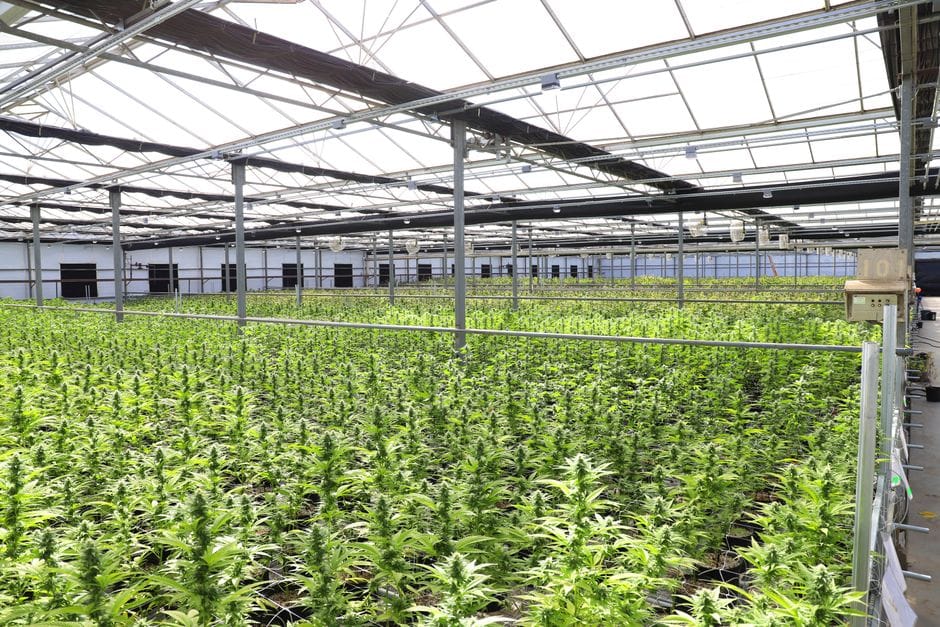
In 2021, at the peak of what the industry called the global 'green rush', Northern Leaf was awarded the first British high-THC commercial cultivation licence granted since GW Pharmaceuticals — now Jazz Pharmaceuticals — received one in 1998. The company had already secured 100,000 square feet of glasshouse space and had invested £12.5 million purchasing and refitting the facility, with a further £6 million earmarked for development. On paper, the conditions for success were exceptional: a supportive regulatory environment in Jersey, substantial capital, and a near-monopoly position on licensed high-THC cultivation in the British Isles.
By early 2024, the company was on the brink of liquidation. It had raised or borrowed more than £30 million, inherited approximately £9 million in secured debt tied to the site and equipment, and owed a further £3.5 million to legacy creditors. Two merger attempts had failed in quick succession. A planned London Stock Exchange listing, announced in 2021, had not materialised. The facility itself was operating at roughly one-quarter of its capacity.
The pattern will be familiar to anyone who has followed European cannabis closely. Capital intensity, regulatory complexity, and the gap between licensed capacity and actual commercial output have eroded several high-profile operators across the continent. Curaleaf's withdrawal from European markets, the stumbles of major Canadian cultivators in their international expansion, and a string of smaller EU-based company failures all share similar structural features: money spent on infrastructure before markets were ready to absorb the product.
The Intervention: Operators, Not Financiers
What distinguishes the Northern Leaf story is what happened next. In spring 2024, two experienced cannabis entrepreneurs assessed the facility and concluded that the problem was not the physical asset — it was the operational and commercial strategy built around it. One of them, Ed Wilkinson, who now serves as Northern Leaf's chairman, made a £2.5 million rescue offer in May 2024 and took formal control of the company in July that year. Steven Tan was brought in as Chief Executive Officer weeks later in September. According to the company's own filings, the pair transferred the necessary funds in time to prevent the company's collapse.
Wilkinson's background is instructive. He is a cultivator by training, not a financier. He had previously built and operated a 120,000 square foot mixed-light cannabis cultivation facility in California and had steered that operation through the severe 2021 price compression in that market, when wholesale prices for dried flower fell by as much as seventy percent. His read of the Northern Leaf facility was blunt: it was a well-built, EU-GMP-accredited asset available at a fraction of its construction cost — an opportunity that the underlying debt and operational dysfunction had obscured.
The Results: Output, Revenue, and Profitability
Under the new management structure, utilisation of the Jersey facility increased from approximately twenty-five percent to seventy-five percent of available capacity. The company produced approximately 6.75 tonnes of medical cannabis flower in 2025, exporting close to 3.6 tonnes of that volume to Germany — Northern Leaf's largest and most strategically important market. Revenue for 2025 reached £8 million, representing a fivefold increase on the prior year's figure. The company recorded its first EBITDA-positive year. It now employs more than 50 people across cultivation, production, engineering, quality assurance, and management, making it the largest employer in Jersey's medical cannabis sector by headcount.
Those figures reflect changes implemented across the full operational chain: genetics selection, cultivation protocols, post-harvest processing, quality management, and route-to-market strategy. According to reporting by Business of Cannabis, the turnaround was not built on a single intervention but on the compound effect of experienced operators making grounded decisions across every part of the business.
What the European Market Can Take From This
The Northern Leaf case is particularly legible at a moment when European medical cannabis markets are maturing unevenly. Germany's rescheduling of cannabis from a narcotic to a medicine in early 2024 has opened the largest single market on the continent to a broader range of licensed suppliers, and the demand signal from German pharmacies has proven to be a genuine commercial anchor for cultivators who can meet EU-GMP standards consistently. Northern Leaf's export volumes to Germany are evidence of that dynamic in practice.
For operators and regulators across the Mediterranean and broader EU, the more transferable lesson may be structural. The cannabis companies that have struggled most acutely in Europe are those that treated licensed capacity as the end goal rather than the starting point. The ones demonstrating resilience — whether in the Channel Islands, Portugal, North Macedonia, or Denmark — tend to share a common characteristic: they are run by people with direct cultivation and commercial experience, not primarily by capital markets professionals optimising for a listing event.
Malta's adult-use framework, governed by ARUC (Authority on the Responsible Use of Cannabis) under Chapter 628 of the Laws of Malta, operates at a fundamentally different scale than wholesale export cultivation. However, the Cannabis Harm Reduction Association (CHRA) network that forms the backbone of Malta's adult-use supply chain faces analogous questions about operational sustainability, quality consistency, and the gap between licensed intent and practical delivery. The Northern Leaf experience — that experienced operators with deep cultivation knowledge matter more than capital alone — translates meaningfully into that context, even if the regulatory frameworks differ substantially.
A Template Worth Examining
Northern Leaf has not solved all of its legacy problems. The company still carries the weight of prior debt obligations and operates in a UK regulatory environment that remains more restrictive than much of continental Europe. But it has demonstrated something that the European cannabis industry badly needed: that a fundamentally sound facility, restructured under competent operational leadership, can move from near-failure to commercial viability within a single financial year.
That is not a guarantee of replicability. Timing, market access, genetics, and the specific structure of the rescue mattered enormously in this case. But as a proof of concept — that European cannabis cultivation can be operationally profitable when led by people who understand growing and selling cannabis at scale — it is one of the more credible data points the sector has produced in several years.
As European cannabis regulation continues to evolve and more markets open to licensed cultivation and distribution, the Northern Leaf turnaround stands as evidence that the sector's economics are not irredeemably broken — they are simply unforgiving of the gap between ambition and operational competence.
Sources:
Business of Cannabis — Inside Northern Leaf's Remarkable Turnaround: From Brink of Collapse to £8m Cultivator
https://businessofcannabis.com/inside-northern-leafs-remarkable-turnaround-from-brink-of-collapse-to-uks-leading-cultivator/
Featured image: Photo by Cannafornia on Pexels
Members Discussion