
Culture & Community
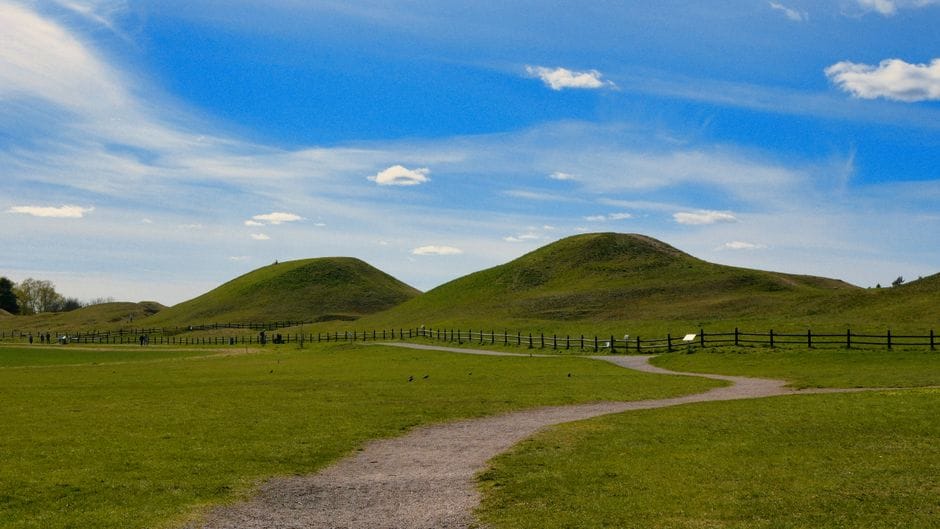
The grave goods were remarkable even by the standards of Scythian royalty: gold ornaments, weapons, the bones of sacrificed horses. But among the objects recovered from a princely burial mound in the Siberian steppe — dated to approximately 800 BCE — archaeologists found something smaller and, in its own way, more striking: physical traces of cannabis, preserved for nearly three millennia beneath frozen soil.
The find, reported by Dolce Vita Magazine citing recent archaeological work in the region, pushes the documented human relationship with this plant to at least 2,800 years ago in Central Asia, though the broader archaeobotanical record suggests the relationship is older still. What makes the Siberian site notable is the directness of the evidence: not just seeds, which can arrive in a burial by accident, but material associated with deliberate use.
The Scythians and the Plant They Carried Across the Steppe
The Scythians were nomadic pastoralists who dominated the Eurasian steppe from roughly the 9th to the 1st century BCE, ranging from the Black Sea coast — present-day Ukraine — east into what is now Kazakhstan and southern Siberia. They were extraordinary horsemen, formidable warriors, and sophisticated craftspeople. They were also, according to multiple ancient sources, enthusiastic cannabis consumers.
Herodotus, writing in the 5th century BCE, described Scythian steam baths in which hemp seeds were thrown onto heated stones, producing vapour that made participants shout with pleasure. For centuries, historians treated that passage as colourful ethnography of uncertain reliability. Then archaeologists started digging up the burial mounds — called kurgans — and finding exactly what Herodotus described: hemp seeds, braziers, tent poles that could have supported a small enclosure. The historian, it turned out, had been accurate.
The Siberian prince's tomb fits this pattern. High-status Scythian burials frequently included objects associated with ritual or ceremonial life, and cannabis appears to have held a specific place in that context. Whether its role was primarily ritual, medicinal, social, or some combination of all three is a question the soil cannot fully answer. The Scythians left no written records of their own.
From the Steppe to the Mediterranean
The Scythian range brought them into contact with Greek colonies on the Black Sea coast, with Persian traders, and eventually — through networks of exchange that archaeologists are still mapping — with the wider Mediterranean world. Cannabis knowledge, like metalworking techniques and artistic motifs, almost certainly travelled those same routes.
By the early centuries of the Common Era, cannabis was documented in medical texts from Alexandria to Persia. Arab physicians carried it into the medieval Mediterranean. It arrived in Malta's history not as an exotic import but as part of the same slow westward diffusion that brought so many Central Asian plants into European material culture — a diffusion that began on steppe burial mounds not so different from the one unearthed in Siberia.
That long arc matters for how we think about cannabis today. The contemporary debate — regulation, harm reduction, responsible adult use — sometimes speaks as though cannabis arrived in Europe in the 1960s, smuggled in with psychedelia and protest music. The Scythian prince's tomb is a reminder that this is a plant with a 2,800-year documented relationship with human society in the broader Eurasian world, and very likely much longer than that.
What Archaeology Cannot Tell Us
It is worth being precise about what the Siberian find does and does not establish. Physical traces of cannabis in a burial context confirm presence and, in this case, strongly suggest intentional use. They do not, by themselves, tell us about frequency, preparation method, or the full social meaning of that use. Archaeology is better at finding objects than at reconstructing the experiences those objects produced.
Nor does ancient use tell us anything directly about contemporary safety profiles, appropriate dosage, or the specific risks and benefits of modern cannabis consumption. The plant cultivated in 800 BCE would have had a very different cannabinoid profile — the full spectrum of chemical compounds including THC and CBD that determine cannabis's effects — from the varieties available through Malta's regulated adult-use Cannabis Harm Reduction Association (CHRA) network today. Ancient evidence is cultural and historical context, not a pharmacological argument.
What it does offer is perspective. Cannabis has been part of human ritual, medicine, and social life across an enormous span of time and geography. The contemporary project of regulating it responsibly — the work of institutions like ARUC (Authority on the Responsible Use of Cannabis), Malta's regulator for adult cannabis use — is not an attempt to introduce something alien into human culture. It is an attempt to bring something very old under considered, evidence-based governance.
The Long View
There is something quietly clarifying about a 2,800-year-old tomb. Policy debates, enforcement disputes, licensing frameworks — they all look slightly different against that timescale. Humans have been finding ways to use cannabis, ritualising it, trading it, and arguing about it for longer than most of our political institutions have existed.
The Scythian prince was buried with his cannabis the way other princes were buried with their swords or their amphorae of wine: as something that mattered, that was worth taking into whatever came next. We are still, in our own way, figuring out what it means.
Sources:
Dolce Vita Magazine — Siberia, nella tomba di un principe scita le tracce della cannabis di 2.800 anni fa
Featured image: Photo by Tushar Mahajan on Pexels
Members Discussion