
Culture & Community
In the crowded gallery of twentieth-century counterculture figures, few cast a longer or more ambiguous shadow than Carlos Castaneda. Author, self-styled anthropologist, and — depending on whom you ask — either a visionary chronicler of indigenous shamanic knowledge or one of the most audacious literary frauds in academic history, Castaneda occupies a unique and uncomfortable position in the story of how Western society came to engage with psychoactive plants. As interest in plant medicine, entheogenic research, and consciousness studies continues to grow across Europe, revisiting his legacy is less an exercise in nostalgia than an act of intellectual hygiene.
A Character Built From Erasure
Born César Castañeda in Cajamarca, Peru, on 25 December 1925, Castaneda appeared in the United States as a young man, eventually settling in Los Angeles, California, where he studied anthropology at the University of California, Los Angeles (UCLA). He became a naturalised American citizen, dropping the tilde from his surname — an alteration he attributed, with characteristic flair, to the absence of the letter "ñ" on the registry typewriter. What came before his arrival in North America is, by design, almost impossible to verify. Castaneda systematically dismantled the paper trail of his earlier life, a move his supporters read as a conscious literary device — constructing a persona consonant with his work — and his critics read as the calculated erasure of inconvenient facts.
In 1968, he published The Teachings of Don Juan: A Yaqui Way of Knowledge, a text he submitted as his doctoral dissertation to UCLA. The book described his alleged apprenticeship under Don Juan Matus, a Yaqui shaman from northern Mexico who guided him through encounters with peyote, jimsonweed, and psilocybin mushrooms as instruments of knowledge and perception. The academic community granted him his doctorate. The counterculture gave him something far larger: a mythology.
The Book That Launched a Thousand Journeys
The timing of The Teachings of Don Juan was, commercially and culturally, near perfect. The late 1960s were a moment when a significant segment of Western youth was actively seeking alternatives to the rationalist, materialist frameworks that had dominated post-war life. Entheogenic plants — substances used in ritual and spiritual contexts to produce altered states — were simultaneously being explored by figures such as Albert Hofmann, the Swiss chemist who first synthesised LSD, and R. Gordon Wasson, the American ethnomycologist whose 1957 Life magazine account of a psilocybin ceremony with Mazatec healer María Sabina had introduced mushroom culture to a mass readership.
Into this moment stepped Castaneda, offering something neither Hofmann nor Wasson had provided: a full narrative of personal transformation. Where Hofmann wrote with scientific precision and Wasson with scholarly distance, Castaneda wrote with the seductive pull of a novel. Don Juan was not a study subject; he was a teacher, a trickster, a guide. Readers did not merely learn about shamanism — they were invited to want it for themselves.
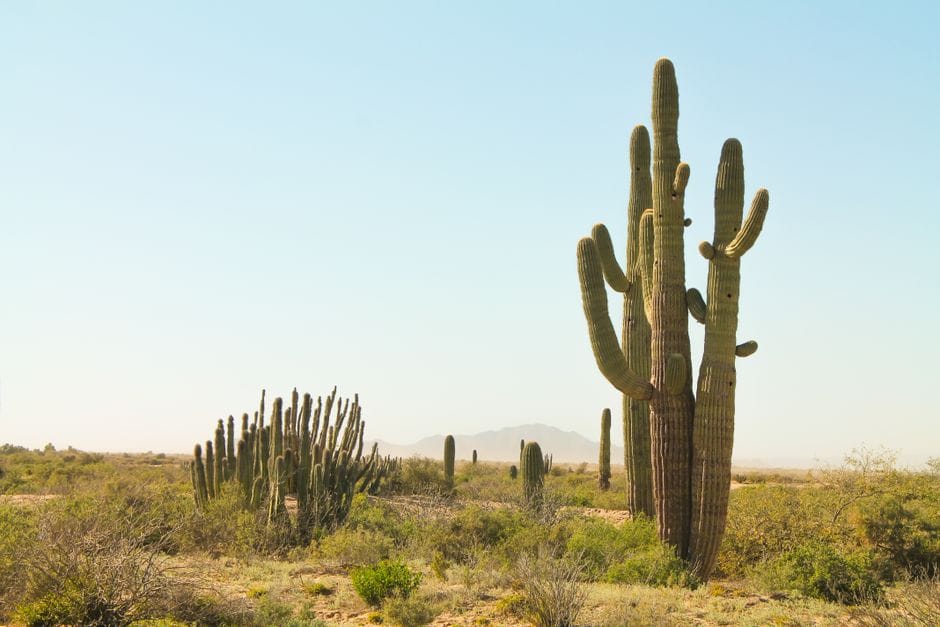
The consequences were tangible. Thousands of young Westerners crossed into Mexico and pressed into the Sonoran Desert, searching for the shamans Castaneda described, hoping to replicate the initiatory experiences of Don Juan's unnamed apprentice — who was, ostensibly, Castaneda himself. This movement effectively inaugurated what we might now call entheogenic tourism: the practice of travelling to source communities not as researchers or guests, but as spiritual consumers seeking a pre-packaged transcendence.
When the Questions Came
For roughly five years, Castaneda's claims were taken largely at face value within both academic and countercultural circles. The cracks began to appear when researchers — including, notably, Wasson himself — began asking for verifiable evidence. The botanical descriptions in Castaneda's books were inconsistent with known Yaqui plant use. The pharmacological sequences he described raised serious questions among ethnobotanists. And Don Juan, despite supposed extensive fieldwork, left no corroborating witnesses, no recordings, no independently verified encounters.
Among the most persistent and rigorous critics was the American researcher Jonathan Ott, author of Pharmacotheon: Entheogenic Drugs, their Plant Sources and History (1993), a landmark text in the serious study of psychoactive plants. Ott and others argued that Castaneda had not falsified peripheral details but the entire foundation of his work — that Don Juan was, in all likelihood, a literary construction rather than a living informant, and that the "fieldwork" was, at best, a creative extrapolation from existing ethnographic literature.
"The damage Castaneda did was not simply to his own reputation. It was to the credibility of anyone trying to study indigenous plant knowledge with rigour and respect."
What the Myth Reveals About the West
The enduring fascination with Castaneda — his books have sold millions of copies and remain in print — says less about the man himself than about the hunger he was feeding. Western modernity, having systematically suppressed indigenous relationships with psychoactive plants through colonisation, religious prohibition, and eventually criminal law, produced a culture profoundly alienated from that knowledge. When it resurfaced in the mid-twentieth century, it did so in distorted forms: sensationalised, commodified, stripped of its ecological and communal context.
Castaneda understood this hunger intuitively, whether or not he understood much else. He offered the West a story about itself — specifically, about the possibility of recovering something it had lost. That the story may have been largely invented does not diminish the reality of the need it addressed. It does, however, demand that we be honest about the difference between genuine engagement with indigenous knowledge systems and the consumption of a comforting fiction dressed in anthropological clothing.
This distinction matters acutely today, as entheogenic research accelerates across Europe and institutions from Johns Hopkins University to Imperial College London publish peer-reviewed studies on psilocybin, MDMA, and ketamine-assisted therapies. The scientific frameworks being built now are painstaking precisely because so much credulous mythology was laid down in their place half a century ago. Castaneda is part of that foundation — the cautionary stratum beneath the more careful work being done above it.
A Legacy Worth Examining Honestly
None of this erases the genuine philosophical questions that animated Castaneda's books, even if his methods were indefensible. Questions about the limits of rationalism, about embodied knowledge, about non-Western epistemologies and their relationship to consciousness — these remain serious and alive. They are being engaged today by researchers, anthropologists, and harm reduction practitioners with the rigour that Castaneda either could not or would not apply.
For cannabis consumers and plant medicine communities across Europe, the Castaneda story offers a useful lesson: the desire to connect with alternative modes of knowledge is legitimate and historically deep. But myth, however seductive, is not a substitute for honesty — about sources, about methods, and about the communities whose traditions we claim to respect when we reach for these substances. The most responsible engagement with plant medicine begins not with a shaman in the desert, but with the harder work of distinguishing what we know from what we want to believe.
Castaneda sold millions of books and launched a movement. What he could not provide, in the end, was evidence. In the emerging European landscape of evidence-based psychedelic and cannabis research, that distinction has never been more important.
Featured image: Photo by Ramses Galaz on Pexels
Members Discussion