
Culture & Community
The Kitchen as Common Ground
There is something quietly radical about cooking with cannabis. Not in a countercultural sense — that moment has long passed — but in the way it demands patience, precision, and a genuine respect for the plant. Done well, cannabis cooking is indistinguishable from any other serious culinary endeavour. Done carelessly, it is a lesson in overconsumption that nobody forgets easily.
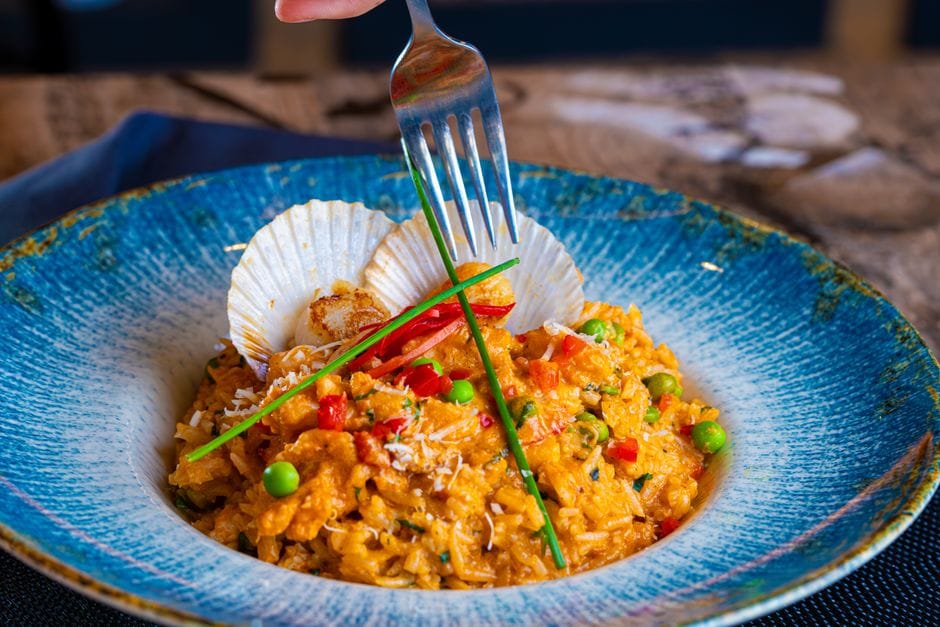
This season's offering from the cannabis kitchen is a creamy risotto of asparagus and peas — a dish rooted in northern Italian tradition, built on carnaroli rice, good stock, and the kind of slow, attentive stirring that rewards those who refuse to rush. Add cannabis to that equation and you have something worth gathering around a table for.
Why Risotto Works
The logic of pairing cannabis with risotto is more than culinary vanity. Fat is the key: THC and other cannabinoids bind to lipids, which means that the butter and olive oil at the heart of a proper risotto are ideal delivery vehicles for an infused preparation. Whether you are working with cannabutter, a cannabis-infused olive oil, or a lab-tested commercial infusion, the fat content of this dish ensures that the cannabinoids are absorbed efficiently and evenly — provided the cooking temperature is managed sensibly.
Heat is a consideration worth taking seriously. Cannabinoids degrade at high temperatures, so the standard advice applies: introduce your infused fat at the finishing stage, off direct heat, rather than as your base cooking fat. The risotto technique accommodates this naturally. The final step — known in Italian kitchens as mantecatura, the vigorous folding of cold butter into the rice to achieve that characteristic creaminess — is precisely the moment to stir in your infused component.
The Recipe, Considered
The base of this dish is straightforward and forgiving. You will need: 50g of butter (divided between standard and infused portions, according to your preference and intended dose), two tablespoons of olive oil, one white onion finely diced, two stalks of celery, two cups of carnaroli rice, one cup of dry white wine, one and a half litres of warm vegetable stock, ten asparagus spears, half a courgette diced small, one cup of fresh or frozen peas, one cup of freshly grated Parmigiano Reggiano, and salt and pepper to taste.
Begin by softening the onion and celery in the olive oil and a portion of the uninfused butter over a medium flame. Add the carnaroli rice and toast it briefly until the grains turn translucent at the edges — this builds the starchy structure that gives risotto its body. Deglaze with white wine and let it absorb almost entirely before beginning to add the stock, one ladleful at a time, stirring consistently and allowing each addition to be absorbed before the next.
Around the fifteen-minute mark, fold in the asparagus cut into short lengths, the diced courgette, and the peas. These vegetables need only a few minutes to cook through and retain their colour. Season with salt and pepper. Then, away from direct heat, add the Parmigiano and — at this stage — your infused butter, stirring with conviction until the risotto is glossy, fluid, and cohesive. Rest briefly before serving.
On Dosing and the Table
Shared meals present a particular responsibility when cannabis is involved, and it is one that any host should take seriously. The guiding principle is simple: transparency and control. Guests should know what they are eating, and the dose per portion should be calculated and communicated clearly before anyone picks up a fork.
Harm reduction advocates have long argued that edibles require greater caution than inhalation, not because the experience is inherently more dangerous, but because onset is slower and the margin for accidental overconsumption is wider. A risotto shared between four people is a very different dosing context from one served to two. Plan accordingly.
The ideal cannabis dinner is one where the food is remembered as fondly as the company — not one where the evening ends earlier than anyone intended.
The asparagus and pea risotto, at its best, is a spring dish: bright, lightly vegetal, and generous. It asks to be eaten at a table, with good wine and people you trust. Cannabis, managed thoughtfully, does nothing to change that — and perhaps, for those who find the plant useful for relaxation or sociability, it adds a dimension that makes the meal something genuinely memorable.
The kitchen has always been where culture is passed on. This is simply one more way that cannabis is finding its place in it.
Sources
Revista THC. "Cocina Cannábica: Risotto de espárragos y arvejas." https://revistathc.com/cocina-cannabica-risotto-de-esparragos-y-arvejas/
Featured image: Photo by Nano Erdozain on Pexels
Members Discussion