
Culture & Community
The Kitchen as Cannabis Space
There is something quietly radical about cooking with cannabis. Not in a countercultural sense — that moment has long passed — but in the way it demands the same attention and care as any serious kitchen practice. You cannot rush an infusion. You cannot skip the resting time. The plant insists on its own pace, and the cook must follow.
Cannabis cuisine has matured considerably beyond the improvised brownies of earlier decades. Today, enthusiasts across Europe and beyond approach infused cooking with the same seriousness they might bring to a sourdough starter or a slow-braised ragù. The recipe that caught our attention this month comes from the Argentine cannabis food tradition — a genre with genuine depth — and it centres on one of the most beloved staples of that culture: the empanada.
What Makes This Recipe Worth Trying
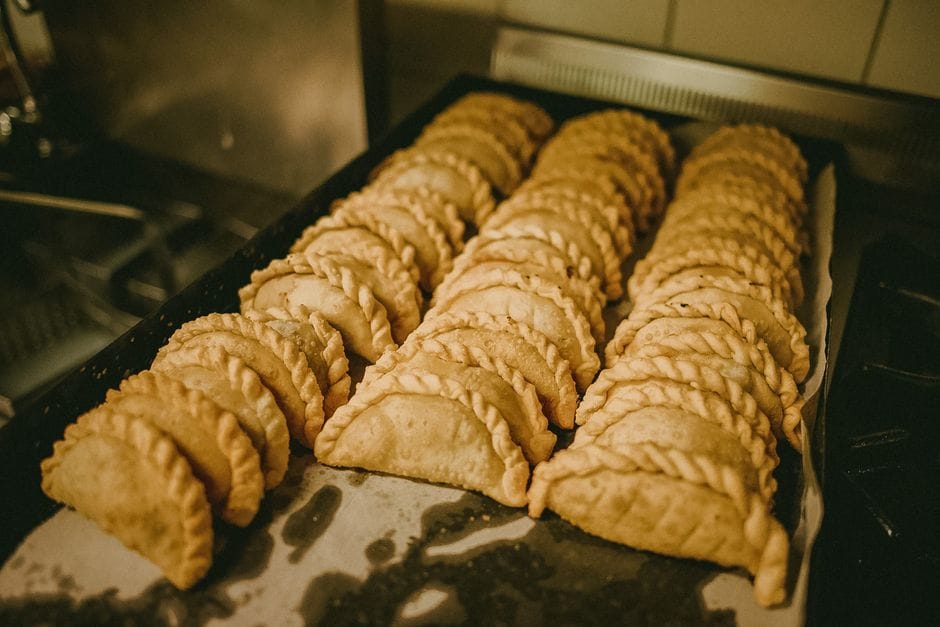
The version we are adapting here is a green empanada, filled with spinach, peas, ricotta, and mozzarella, with the cannabis incorporated not into the filling but into the pastry dough itself, via an infused butter. This is a thoughtful choice. Embedding the infusion in the dough means the cannabis is evenly distributed across every empanada rather than concentrated in a spoonful of filling — a small but meaningful gesture toward consistency of dosing.
The process begins with the infused butter: cannabis and butter are heated together gently for around forty minutes, kept well below boiling point. Patience here is not optional. Too much heat destroys cannabinoids; too little and the infusion is ineffective. Once cooled and strained, the butter is worked into a simple dough alongside flour, salt, egg, water, and smoked paprika. The dough is kneaded until smooth, wrapped, and rested in the refrigerator for an hour before being rolled thin and cut into discs.
The filling is assembled separately: spinach wilted briefly and drained, peas blanched if fresh, then everything brought together in olive oil with garlic, onion, mint, and thyme. A generous seasoning of salt and pepper, then the ricotta and cubed mozzarella folded in once the mixture has cooled. The empanadas are filled, crimped, egg-washed, and baked in a preheated oven until golden. Any leftover pastry discs can be frozen, layered with cling film, for up to three months.
Technique Over Tendency
What distinguishes a cannabis cook from someone who simply adds cannabis to food is attention to technique. The infusion step is where most mistakes happen — overheating, under-straining, or misjudging quantities. There is no universal rule on how much cannabis to use, because potency varies enormously by strain, by the quality of the infusion, and by individual tolerance. The responsible approach is to start conservatively, note your results, and adjust over time.
Consistency in dosing is one of the central challenges of cannabis cooking. Unlike a tincture or a capsule, a baked good introduces variables at every stage — from the heat of infusion to the distribution of butter through the dough.
This is territory that harm reduction advocates have flagged repeatedly. Eating cannabis produces a different pharmacological experience from inhalation — slower onset, longer duration, and effects that can feel more intense if a person eats more before the first portion has taken effect. For anyone new to edibles, the counsel is consistent across the field: eat a small amount, wait at least ninety minutes, and resist the temptation to conclude that nothing is happening.
A Mediterranean Pantry, a Global Tradition
There is something fitting about bringing the empanada into a Mediterranean kitchen. The pastry has cousins throughout the region — the Maltese pastizz, the Tunisian brik, the Greek börek, the Sicilian 'mpanata. All of them share the same logic: a filling of modest ingredients transformed by good dough and heat into something greater than the sum of its parts. The cannabis addition does not change that logic. It extends it.
For those in Malta and across the EU navigating the still-evolving landscape of personal cannabis use, cooking at home represents one of the more deliberate and controllable ways to engage with the plant. You know what went in. You control the process. You sit down with people you trust and eat something you made together.
That, in the end, is what cannabis cuisine at its best has always been about — not novelty, but conviviality. The empanada, in any language, understands this perfectly.
Sources
Revista THC, "Cocina Cannábica: empanadas de arveja y espinaca": https://revistathc.com/cocina-cannabica-empanadas-de-arveja-y-espinaca/
Featured image: Photo by Lucas Gramatica on Pexels
Members Discussion