Culture & Community
The letter arrived, as these letters do, without much warning. An Italian customs and border officer — a finanziere, in the parlance of Italy's Guardia di Finanza — was informed that his employment was being terminated. The reason: he had been using cannabis light, Italy's term for low-THC hemp-derived cannabis products, to manage chronic insomnia. No criminal charge. No evidence of impairment on duty. Just a consumption habit, conducted privately, involving a product sold legally on Italian high streets.
The officer appealed. And in a decision that has since circulated widely in Italian cannabis policy circles, the TAR — the Tribunale Amministrativo Regionale, Italy's system of regional administrative courts — ruled in his favour and blocked the dismissal.
What the Court Actually Said
The TAR's reasoning, as reported by Soft Secrets, centred on proportionality. The officer had used cannabis light — products containing THC levels at or below Italy's legal threshold of 0.5 percent — for a documented medical purpose: insomnia. The court found that the disciplinary response was disproportionate to the conduct in question, particularly given that the product involved was legally available and the officer had not been shown to be impaired in the performance of his duties.
The case cuts to a tension that employment law across Europe has not fully resolved: the gap between what is legal to purchase and consume as a citizen, and what employers — particularly public-sector or security-sector employers — may prohibit or penalise. In Italy, cannabis light exists in a permanent legal grey zone. It is sold freely, yet its status has been challenged repeatedly in courts and by law enforcement agencies that view any cannabis-adjacent behaviour in uniformed services with suspicion.
A Precedent With Limits
Legal observers are cautious about how far this ruling travels. Administrative court decisions in Italy are jurisdiction-specific and do not automatically bind other tribunals or employers. The Guardia di Finanza, as a law enforcement and financial police body, operates under stricter codes of conduct than most civilian employers, which makes the ruling's logic — that legal consumption of a legal product, outside of duty hours, without demonstrated impairment, does not justify dismissal — all the more striking.
What the case does establish, at minimum, is that Italian courts are willing to weigh the proportionality of disciplinary action against the legal status of the substance involved. That is not nothing. For the thousands of Italians who use cannabis light products for sleep, anxiety, or pain — products available in dedicated shops that number in the thousands nationwide — the ruling offers a small but meaningful signal that legal consumption carries some legal protection.
The Mediterranean Question
The Italian case lands at an interesting moment for the wider Mediterranean region, where cannabis regulation is evolving at different speeds in different jurisdictions. In Malta, the 2021 cannabis reform — formally Chapter 628 of the Laws of Malta — created a framework for adult-use cannabis through licensed Cannabis Harm Reduction Associations (CHRAs), non-profit member clubs through which adults may access cannabis within defined limits. ARUC (Authority on the Responsible Use of Cannabis), the Maltese regulator, oversees the framework, which is built explicitly around harm reduction rather than prohibition.
Under Maltese law, adult cannabis consumption is decriminalised, and the CHRA model is designed to keep consumption within a responsible, regulated structure. But Maltese employment law has not been tested in the same way the Italian case tests Italian employment law. Whether a Maltese public-sector employee — a police officer, a soldier, a civil servant — could face disciplinary action for lawful cannabis consumption in their private life remains an open question, one that the Italian ruling may eventually prompt someone to ask formally here too. Our ARUC Compliance Handbook outlines what the current adult-use framework permits for consumers, but the employment dimension sits outside that framework entirely.
The Insomnia Detail Matters
It is worth pausing on the specific medical context. The officer used cannabis light for insomnia — one of the most commonly cited reasons adults across Europe turn to CBD and low-THC products. Sleep disorders affect an estimated 30 to 45 percent of the adult population in EU member states, according to figures cited by the European Sleep Research Society. Pharmaceutical sleep aids carry their own dependency and side-effect profiles. The idea that an adult choosing a legal, low-THC alternative to manage a sleep disorder could lose a career over it strikes many observers as a poor use of disciplinary procedure.
The TAR, it seems, agreed.
Employment protections for cannabis consumers are not a niche concern. As legal cannabis frameworks expand across Europe — from Malta's CHRA model to Germany's recent partial liberalisation — the question of where private lawful consumption ends and employer authority begins will keep arriving in courtrooms. Italy just gave one answer. It will not be the last.
The deeper issue is not really about cannabis at all. It is about whether legal behaviour, conducted privately, by a competent employee, should cost someone their livelihood — and who gets to decide.
Sources: Soft Secrets (Italy)
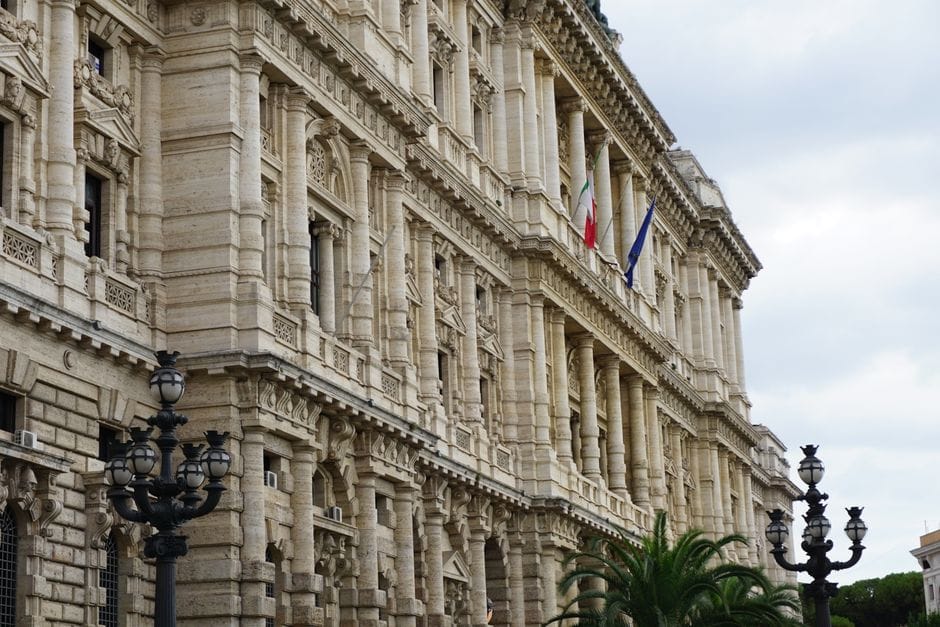
Featured image: Photo by Babak Habibi on Pexels
Members Discussion